 Bitcoin Bangkit Lagi! BTC Tembus US$81.000, Level Ini Jadi Penentu Berikutnya
  Pembiayaan Dana Tunai BRI Finance Tumbuh 44,74% hingga Semester I-2026
  Saat Kebutuhan Datang Tak Terduga, BRI Finance Hadirkan Solusi Dana yang Fleksibel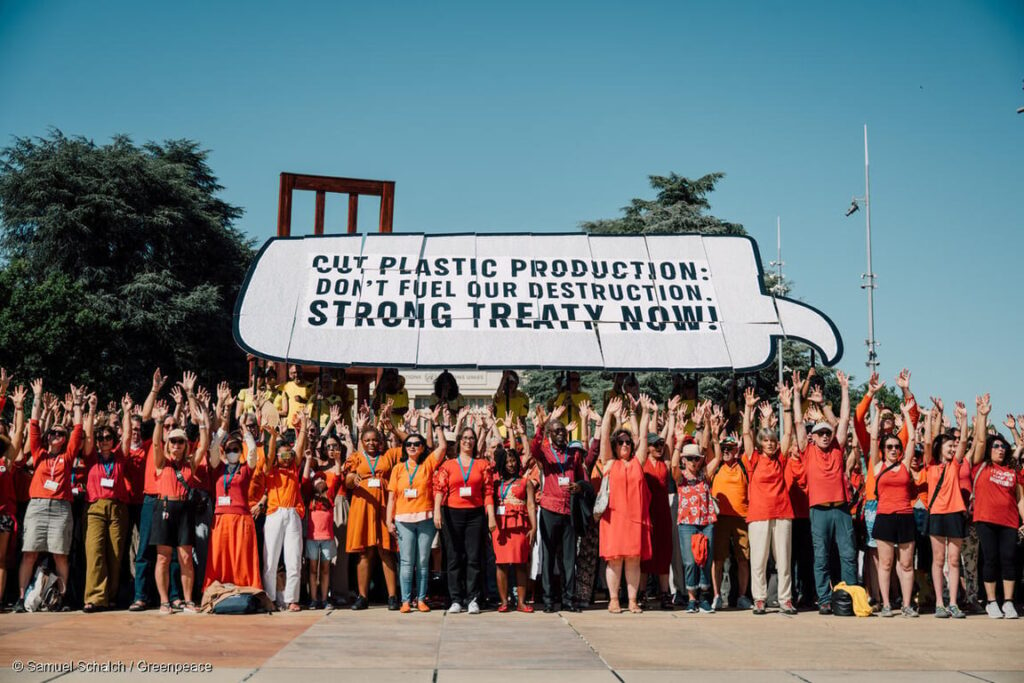
11 August 2025, Geneva, Switzerland/Quezon City, Philippines — With just three days left before the final round of negotiations for a Global Plastics Treaty comes to a close in Geneva, Switzerland, civil society groups, scientists, and community representatives warn that talks are veering off course, risking a weak agreement that fails to protect people and the planet from plastic pollution.
Greenpeace Philippines Zero Waste Campaigner Marian Ledesma, in Geneva for the negotiations, raised alarm over mounting industry influence and the attempts of oil-producing states to water down the treaty’s scope, focusing only on waste management and excluding measures to cut plastic production and address health impacts.
“We are running out of time,” Ledesma said. “A watered-down treaty that ignores plastic production cuts would be a betrayal of the millions of people counting on their leaders to protect health, human rights, and the environment. A weak treaty will be nothing more than a fig leaf for polluters. World leaders promised ambition, and ambition means tackling the problem at its source, not passing the burden to communities already drowning in plastic.”
Concerns over undue influence have grown as reports show hundreds of fossil fuel and petrochemical lobbyists attending past sessions—far outnumbering health and environmental experts. Advocates say this imbalance threatens to derail the process and weaken the treaty at the expense of people and the planet.
In the Philippines, over 80 civil society organizations, academic institutions, and businesses have urged the Department of Environment and Natural Resources (DENR) to align with countries pushing for ambitious production reduction targets and upstream solutions such as reuse and refill systems. In response, the DENR has affirmed its support for a full life cycle approach to plastics—addressing pollution from extraction to disposal—echoing calls from scientists and advocates worldwide.
“This Global Plastics Treaty is a way forward for us to solve our situation on waste,” said Atty. Janice Regoso-Pammit, Chief of the Legal Division and Concurrent Board Secretary of the Pollution Adjudication Board of the Environmental Management Bureau. “Issues on health, product design, financial mechanism, release and leakages, waste management, the whole life cycle of plastics, the extended producer’s responsibility, and the transparency and traceability are key points that the Philippines submitted as our conference room paper for this INC 5.2.”
“Supporting a full life cycle approach internationally should mean adopting the same ambition at home by cutting plastic production, phasing out single-use plastics, and building strong reuse systems in the Philippines,” said Ledesma. “Anything less would betray the communities already suffering the impacts of plastic pollution.”
The groups continue to call on the government to:
Back a global target to cut primary plastic production.
Support the phaseout of common single-use plastics and toxic chemicals.
Establish zero-waste systems like reuse and refill.
Protect health through programs that uphold environmental rights.
Ensure inclusive consultations with youth, small businesses, and affected workers.
Push for fair financing and trade rules.
Ground the treaty in human rights, just transition, and sound environmental policy.
You may also like
-
Carziqo Launches ER-BX Autonomous Ride-Hailing Operations in San Francisco
-
Trans-Asiatic Trading Expands Distribution of Gerflor Streamo Marine Vinyl Flooring to Key Philippine Shipyards
-
‘Dragon King’ scores ₱122.4-M win in Casino Plus, says historic jackpot ‘felt like a dream’
-
VRITIMES Covers LogiSYM Philippines 2026, Alongside Transport & Logistics Philippines 2026
-
TPSW 2026 Photo Contest Invites Photographers to Spotlight Volunteerism Across Asia