 Hadir di Pameran Otomotif Sumatera Barat, BRI Finance Tawarkan Promo Bunga KKB 0%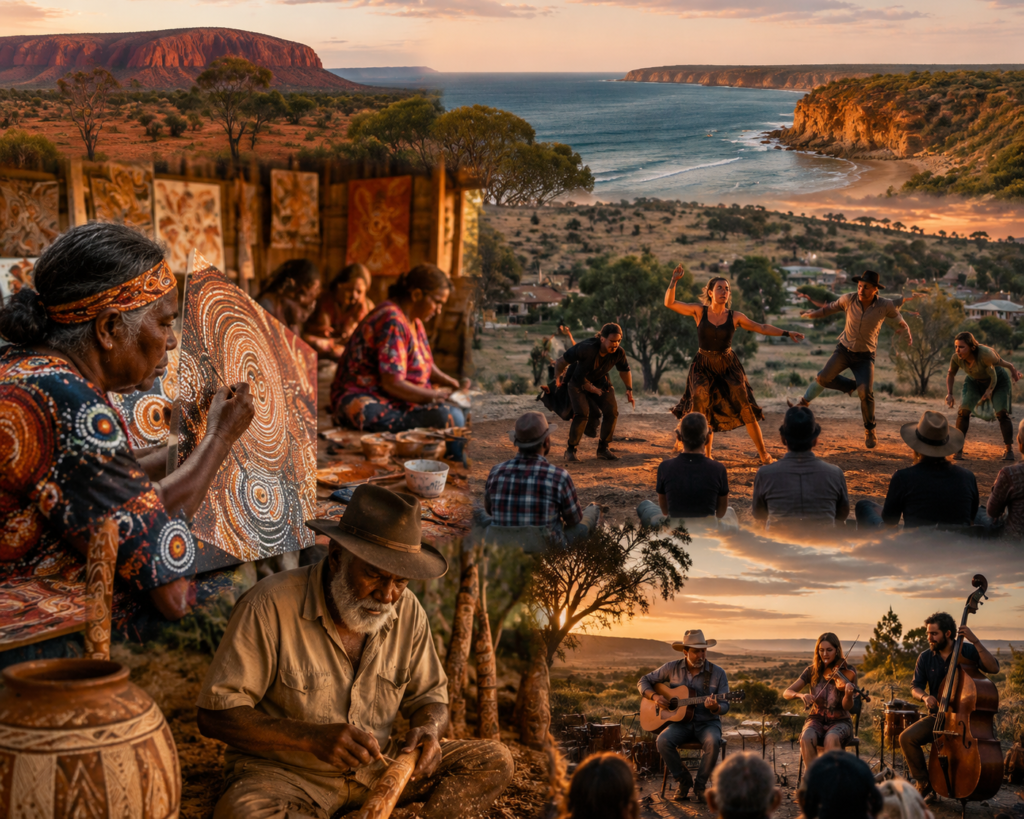
While cities like Sydney, Melbourne, and Brisbane dominate Australia’s cultural landscape, a significant portion of artistic activity occurs in regional and remote areas. These communities contribute unique perspectives shaped by geography, environment, and local identity.
Regional visual arts often draw inspiration from the natural landscape. Artists working in desert, coastal, or rural environments frequently incorporate elements of land, climate, and ecological change into their work. This creates a strong connection between art and environment that is distinct from urban practices.
Indigenous communities in remote Australia are especially important to the national arts scene. Art centers in places such as Arnhem Land and the Western Desert support local artists in producing paintings, carvings, and textiles that are sold nationally and internationally. These centers also help preserve cultural knowledge and provide economic opportunities.
Theatre and performance in regional areas tend to be community-driven. Touring companies and local ensembles bring productions to towns that may not have permanent theatre infrastructure. This ensures access to cultural experiences outside metropolitan centers.
Music scenes in regional Australia are equally vibrant, often blending country, folk, and Indigenous musical traditions. Local festivals and community events serve as key platforms for performance and cultural exchange.
Despite their creativity, regional artists face challenges such as limited funding, geographic isolation, and reduced access to major institutions. However, digital platforms are increasingly helping bridge this gap by enabling remote artists to share their work globally.
You may also like
-
Indonesia Signals Stronger Regulatory Focus on Business Substance
-
Low-cost mental health tool helps refugees in limbo
-
The Growing Compliance Challenge for Foreign Investors in Indonesia
-
Indonesia Increases Focus on Business Activity Verification for Foreign Investors
-
Boom-and-bust cycle slowing home building, report finds