 Peduli Kesehatan Lingkungan, PTPN Group melalui Unit Riset Sungei Putih PT RPN Berkolaborasi Lakukan Fogging
  Tips Traktir Teman ketika Ulang Tahun agar Tidak Boncos
  Mengatur Keuangan Saat Punya Cicilan agar Tetap Terkendali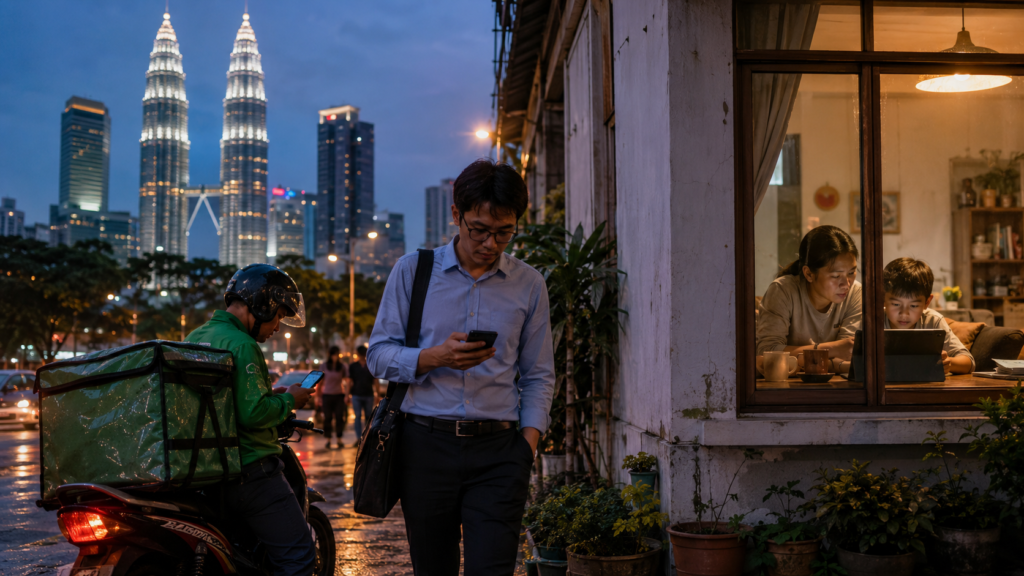
Global Economic Integration and the New Employment Reality
Malaysia’s labour market is undergoing structural transformation driven by globalisation, digital platforms, and shifting corporate practices. Employment is no longer confined to traditional full-time office roles. Instead, flexible, contract-based, and platform-mediated work has become increasingly common across urban and semi-urban areas.
According to Bank Negara Malaysia’s labour and economic reports, the shift toward services and digital sectors has accelerated over the past decade, reshaping how income is earned and how job security is defined: https://www.bnm.gov.my/publications
Expansion of Gig-Based Employment
The rise of e-hailing, food delivery services, freelance marketplaces, and remote digital work platforms has created new income pathways. Many Malaysians now rely on apps such as Grab, Shopee, Fiverr, and Upwork to generate primary or supplementary income.
This transformation has made labour more accessible. Students, part-time workers, and caregivers can participate in the economy without formal office commitments. However, this flexibility comes with volatility. Earnings fluctuate daily, benefits are limited, and workers often bear operational costs such as fuel, maintenance, and data usage.
A delivery rider in Klang Valley, for instance, may experience high demand during festive seasons but face income instability during off-peak periods. This unpredictability highlights the dual nature of platform-based labour: opportunity paired with insecurity.
Corporate Globalisation and Remote Employment
Multinational companies operating in Malaysia increasingly adopt hybrid and remote work structures. Employees in Kuala Lumpur may collaborate with teams in Singapore, India, Europe, or the United States. This cross-border integration enhances skill development and exposure to international standards.
However, it also intensifies workload expectations. Deadlines are often aligned with multiple time zones, extending working hours beyond conventional limits. Work-life boundaries become blurred, especially in digital-heavy professions such as marketing, software development, and consulting.
Inequality in Digital Labour Access
Not all workers benefit equally from globalised labour markets. High-skilled professionals with strong English proficiency and digital literacy access better-paying opportunities. In contrast, low-skilled workers face limited upward mobility and competition from automation or cheaper labour markets abroad.
Rural populations and older workers are particularly vulnerable to exclusion. Without adequate digital training and infrastructure, they risk being left behind in the evolving labour economy.
Case Insight: Urban Workforce Pressure in Kuala Lumpur
In Kuala Lumpur’s corporate districts, professionals often manage hybrid schedules while remaining digitally connected after office hours. Many report increased burnout due to constant communication demands and performance tracking software. This reflects a broader global trend where productivity is continuously monitored, reducing psychological separation between work and rest.
Structural Adjustment and Future Outlook
Malaysia’s labour market is moving toward a hybrid system combining formal employment, gig work, and remote global contracts. The challenge lies in balancing flexibility with protection. Policy discussions increasingly focus on social insurance for gig workers, upskilling programs, and fair platform regulation to ensure inclusive growth in a globalised economy.
You may also like
-
As AI Reshapes Society, Malaysia to Host AACM 2026 to Explore the Future of Humanity
-
ICW AND BUILDXPO MALAYSIA 2026 PREVIEW: NEW PLATFORMS, IDEAS AND INNOVATIONS TAKE CENTRE STAGE
-
Three lessons from Hangzhou, and one potential partnership to follow up: Sanct Social founder on China’s Global Digital Trade Expo
-
Monash University Malaysia Leads Triple Alliance’s Flagship Mental Health Initiative To Strengthen Student Wellbeing
-
Xerox Returns To Malaysia With New A4 Colour Portfolio Following Lexmark Integration