 Peduli Kesehatan Lingkungan, PTPN Group melalui Unit Riset Sungei Putih PT RPN Berkolaborasi Lakukan Fogging
  Tips Traktir Teman ketika Ulang Tahun agar Tidak Boncos
  Mengatur Keuangan Saat Punya Cicilan agar Tetap Terkendali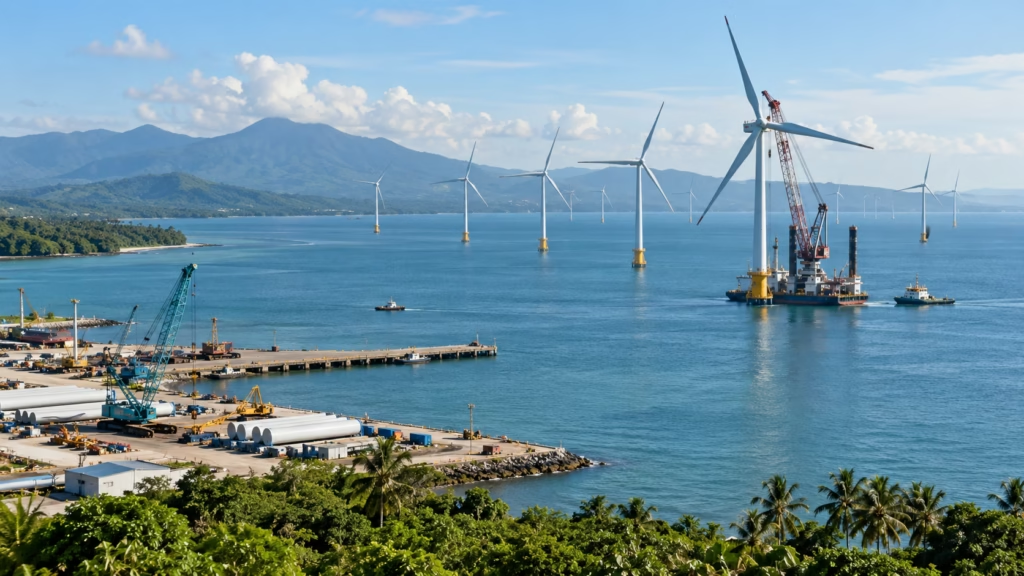
A Regional First Within Reach
The Philippines is no longer simply studying offshore wind. It is racing to build it. At the center of this ambition is the 901-megawatt San Miguel Bay Offshore Wind Power Project in Camarines Sur—a joint venture between Copenhagen Infrastructure Partners (CIP) and Ayala-led ACEN Corp. that is poised to become the first offshore wind farm not only in the Philippines but in Southeast Asia. Finance Secretary Frederick Go recently met with CIP executives to accelerate financing arrangements and preparations for the upcoming Green Energy Auction.
Why the Government Is Treating This as Strategic Infrastructure
Go framed the project in terms of energy security, not merely generation capacity. “Global companies are actively seeking renewable energy to power their operations and meet sustainability commitments to their own customers—and the Philippines needs to be ready to meet that demand,” he said. The San Miguel Bay project, he added, will “help provide cleaner and more reliable energy, create quality jobs, spur local economic growth and support a more resilient and sustainable future.”
The project is expected to contribute directly to the renewable energy targets under the Philippine Energy Plan 2023–2050.
The Pipeline Behind the Pilot
San Miguel Bay is not an isolated bet. The Department of Energy has awarded 95 offshore wind service contracts with a potential combined capacity of around 72 gigawatts. The Board of Investments has registered 11 offshore wind projects totaling approximately Php1.185 trillion and 5,800 MW of capacity, with a significant share backed by foreign developers. Acting Director Francis M. Peñaflor stated the goal plainly: “Our goal is to position the Philippines as a competitive regional hub for offshore wind supply chain activities.”
The Port Bottleneck Nobody Can Ignore
Subic and Bulalacao as Gateways
A study by the Global Wind Energy Council identified Agila Subic and the Port of Bulalacao in Oriental Mindoro as priority infrastructure hubs. GWEC estimates Agila Subic could attract approximately USD 215 million in phased investments, while Bulalacao would require USD 252 million for Phase 1 and another USD 70 million for Phase 2. Total port-related investment requirements reach USD 487 million.
The Financing Gap
GWEC warned that existing port tariff structures may be insufficient, recommending bankable concession-based business models and a national offshore wind port strategy roadmap.
The Consumer Price Signal
The Energy Regulatory Commission has set a ceiling price of Php 11.00 per kilowatt-hour for offshore wind under GEA-5, which targets 3,300 MW of fixed-bottom capacity for delivery between 2028 and 2030. The adjustment from an earlier preliminary rate reflected port rental, fishery compensation, land acquisition, inflation, and foreign exchange assumptions.
This is the Philippines making a calculated industrial bet: that by building ports, setting prices, and registering projects now, it can convert one of Asia’s most promising offshore wind pipelines into operating steel in the water before its neighbors do.
You may also like
-
VRITIMES Exhibits at SUPPLYCON 2026 as Official Media Partner
-
Casino Plus, official presenter ng MassKara Festival 2026; Zeinab, Moonstar88, Baby Dolls, magpapasiklab sa 3-day concert
-
Gyukatsu BGC Brings Its Signature Japanese Beef Cutlet Experience to Park Triangle Mall
-
How an AI Communication Coach Helped a First-Generation Filipina Immigrant Find Her Voice
-
44th ASEAN Ministers on Energy Meeting (AMEM) and AEBF-26 Open in Manila, Marking New Milestones in ASEAN Energy Cooperation