 Sanct, a social app in Bahasa Melayu where your first friends are added face to face, introduces itself to Malaysia with a short film about the friend who notices
  Sanct opens App Store pre-orders as Episode 4 of its family film series is released
  Cara Merawat Kucing Kampung agar Sehat, Aktif dan Gemuk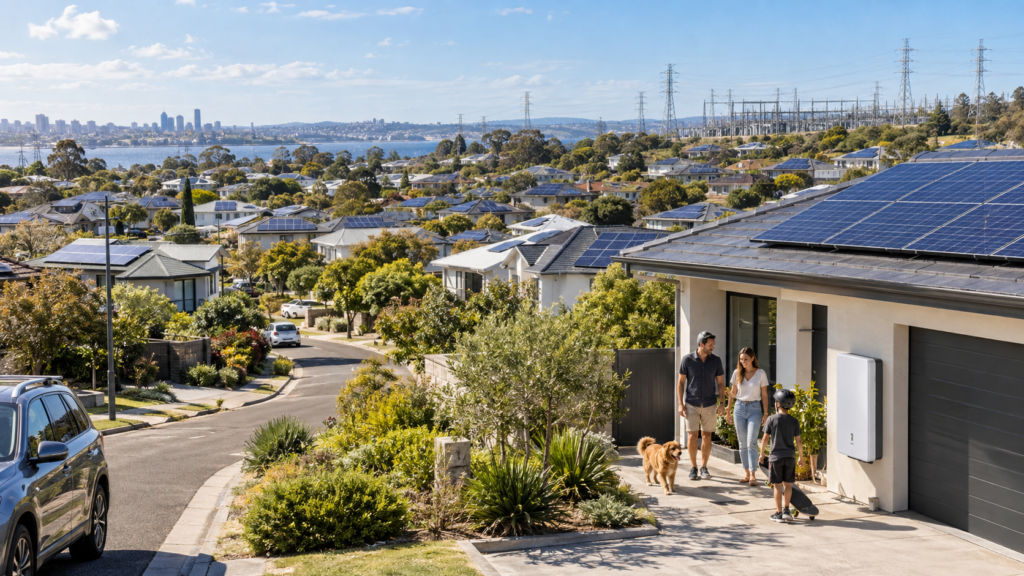
Australia’s renewable energy transition is not just about building solar farms and wind turbines—it is about reimagining the geography of electricity generation and transmission. Renewable Energy Zones, or REZs, have emerged as the central organising principle for this spatial transformation, concentrating new generation and storage in areas with the best resources and coordinating the transmission infrastructure needed to deliver power to consumers. The concept is straightforward but the execution is enormously complex. AEMO’s Draft 2026 Integrated System Plan identifies 44 potential REZs across the National Electricity Market, including five candidate offshore wind zones. These zones will become the powerhouses of Australia’s clean energy future, replacing the coal-fired generators that have dominated the grid for generations. The full plan is available at https://aemo.com.au/.
New South Wales has taken the lead in REZ development. The Central-West Orana Renewable Energy Zone, the first declared REZ in Australia, will deliver enough energy to power more than 2 million homes and is scheduled to ramp up from 2028. This zone represents a new model for energy development, grouping new wind and solar projects together with shared transmission infrastructure that can efficiently store and transmit electricity across the state. The Hunter-Central Coast Renewable Energy Zone is another critical piece of the puzzle. Construction officially commenced on the zone in March 2026, and it will be the first REZ in Australia to upgrade existing distribution poles and wires. This integration of transmission and distribution infrastructure represents an evolution in how REZs are conceived and delivered.
Victoria has formally declared five onshore renewable energy zones and a dedicated shoreline zone for offshore wind infrastructure. These zones—Central Highlands, Gippsland, North West, South West, and Western—together offer significant hosting capacity for new renewable generation. The Central Highlands REZ alone has a hosting capacity of 4 gigawatts, while the Gippsland REZ, which will also host offshore wind connections, offers 5.2 gigawatts. Between 2024 and 2026, at least 5 gigawatts and 11 terawatt-hours of generation and 1.7 gigawatts and 6.8 gigawatt-hours of storage capacity will be tendered in Victoria, for delivery by 2030. This coordinated approach to development ensures that generation, storage, and transmission are planned together rather than piecemeal.
If there is a single challenge that threatens to slow Australia’s renewable energy transition, it is transmission. The connection of new generation projects to the grid has become a bottleneck, with developers facing lengthy approval processes, connection delays, and uncertainty about who bears the cost of network upgrades. The federal government has recognised this challenge. The 2026 Integrated System Plan has strengthened the reliability outlook, backed by around 40 gigawatts of new generation and storage now committed or anticipated, with a further 33 gigawatts supported by government programs. However, the transmission infrastructure needed to connect these projects to consumers is not being built at the same pace. This mismatch between generation and transmission timelines creates risks for both investors and consumers. Projects can be delayed for years waiting for grid connections, increasing costs and undermining the business case for new investment. The Australian Energy Market Commission has been working to reform connection processes, but progress has been slower than many in the industry would like.
The REZ model also addresses one of the most sensitive aspects of the energy transition: social licence. By concentrating renewable energy development in designated zones, the approach aims to minimise the footprint of new infrastructure and share the benefits more equitably with host communities. The Capacity Investment Scheme’s Tender 7 included nearly 1.2 billion Australian dollars in social licence commitments, delivering shared benefits across local communities and providing employment pathways, ranger programs, mental health support, and capacity building to increase the participation of First Nations communities in the renewable energy transition. More than 257 million Australian dollars worth of Australian steel will be used across these projects, supporting domestic industry and workers.
Australia’s REZ framework represents one of the world’s most ambitious attempts to coordinate renewable energy development at scale. By aligning generation, storage, and transmission planning, the REZ model offers a pathway to avoid the inefficient, piecemeal development that has characterised renewable energy growth in many other countries. The challenges are considerable—transmission delays, social licence, supply chain constraints, and the sheer complexity of coordinating multiple projects across vast distances. But the framework provides a coherent vision for how Australia can transition from a fragmented, coal-dominated system to a coordinated, renewable-powered grid. The success of this model will determine whether Australia can meet its 82 percent renewables target by 2030 and its net-zero ambitions beyond.
You may also like
-
Australians Are Spending Record Amounts on Their Dogs. Yet the Same 3 Health Problems Keep Sending Them to the Vet
-
MEDIA INVITE: The future of super and women’s financial security
-
The Missing Breastfeeding Conversation: What Happens Six Months After Discharge?
-
The finishing touches on George Street’s transformation
-
Momcozy and Midwife Bianca Burge Call for Breastfeeding Support Built Around Real Life