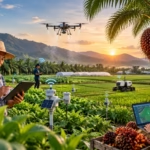
 Bridging the Digital Divide in Malaysian Agriculture: Smallholder Challenges and Systemic Solutions
  Cacco Menjalin Kemitraan Bisnis dengan Perusahaan AI Commerce Indonesia, bitbybit Studio
  PTPN I Raih Anugerah Mahayuga, Tegaskan Peran PTPN Group bagi Ketahanan Pangan Nasional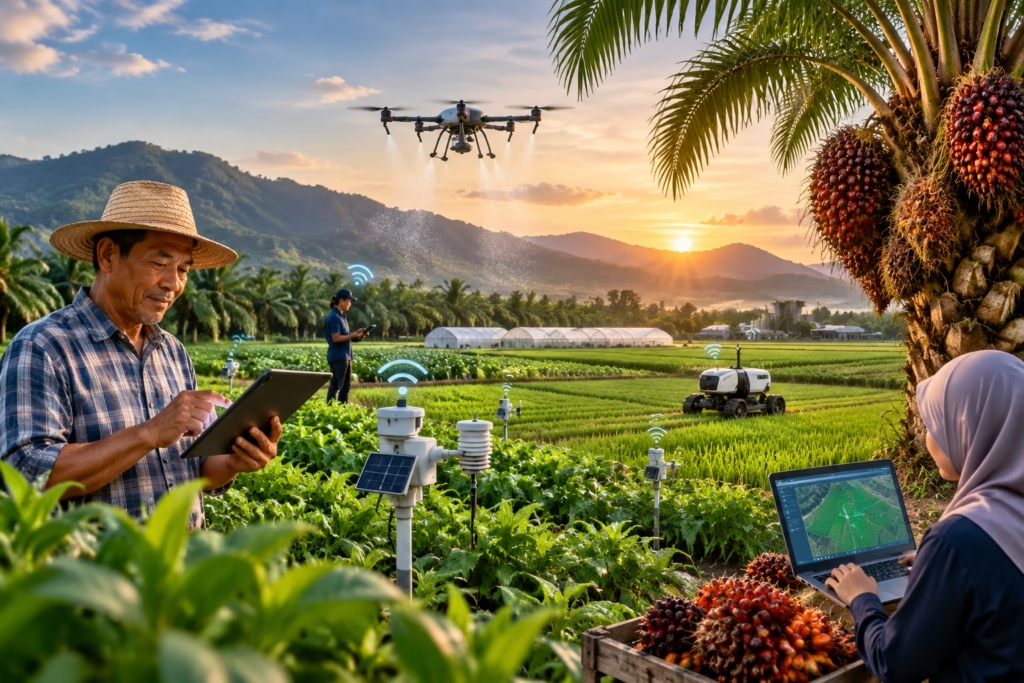
The 27% Adoption Gap: Why Smallholders Lag Behind
Malaysia’s agricultural technology narrative is often framed around impressive innovations in commercial plantations and high-value export crops. Yet a different reality persists for the majority of farmers. Only 27% of Malaysian smallholder farmers have integrated IoT solutions into their operations, with upfront costs, inadequate digital infrastructure, and a lack of technical training identified as the primary barriers.
This adoption gap has significant implications for rural livelihoods and national food security. Smallholders account for a substantial proportion of Malaysia’s agricultural production, particularly in rice, vegetables, and fruits. If these farmers are excluded from the technological transformation, the benefits of digital agriculture will remain concentrated among large-scale operators, exacerbating existing inequalities.
Financial Barriers and the Case for Shared-Access Models
Research examining financial challenges to smart farming adoption among smallholder vegetable farmers in northern Malaysia—specifically Perlis, Kedah, and Penang—has identified capital constraints as the most significant obstacle. The upfront investment required for IoT sensors, automated irrigation systems, and data analytics platforms often exceeds what individual smallholders can afford, particularly when returns on investment are uncertain.
The Malaysia Digital Economy Corporation (MDEC) has advocated for affordable shared-access models as a solution, whereby technology providers lease equipment or offer subscription-based services that spread costs over time. Such models have demonstrated success in other sectors and could be adapted to agricultural contexts, enabling smallholders to access advanced technologies without prohibitive capital expenditure.
Training, Digital Literacy, and Farmer-Led Innovation
Technology adoption is not solely a matter of affordability. Research examining factors influencing IoT adoption among farmers in Selangor and Negeri Sembilan found that adoption is influenced by perceived utility, user-friendliness, institutional and external assistance, and technological apprehension. These findings underscore the importance of farmer-centric design and comprehensive training programmes that address both technical skills and psychological barriers to technology adoption.
Farmer-led innovation is emerging as a complementary approach to top-down technology transfer. The Malaysian Digital Agriculture National Policy 2.0 (DAN 2.0) commits RM150 million to advancing AI-enabled farming, yet adoption of AI chatbots among smallholder farmers remains low, with Melaka-designated pilot zones reporting only about 12% usage. This suggests that even when technologies are available and affordable, adoption depends on their relevance to farmers’ lived experiences and daily operational challenges.
The Path Forward: Infrastructure, Policy, and Inclusion
Bridging the digital divide in Malaysian agriculture requires coordinated action across multiple domains. Rural digital infrastructure—including reliable internet connectivity and mobile coverage—remains a prerequisite for technology adoption. Without these foundational elements, even the most sophisticated agricultural technologies cannot reach the farmers who need them most.
Policy frameworks must also evolve to explicitly prioritise smallholder inclusion. The National Food Security Policy 2026-2030 includes initiatives to drive innovation and growth in the domestic seed industry and advance scalable mechanisation, but these programmes must be designed with smallholder accessibility in mind. Continuous farmer training, affordable technology financing, and clear data governance frameworks are essential components of an inclusive digital agriculture strategy.
The transformation of Malaysia’s agricultural sector will ultimately be judged not by the sophistication of its technologies, but by the extent to which those technologies improve the livelihoods of the farmers who feed the nation.
You may also like
-
Ultima Markets Celebrates 10 Years of Growth, Connections and Shared Success Across Asia-Pacific
-
YAKULT MALAYSIA STRENGTHENS ITS SCIENTIFIC COMMITMENT WITH NEW FUNCTIONAL CLAIM FOR SHIROTA STRAIN TO SUPPORT IMMUNE RESPONSES
-
Understanding Gold Purity: The Differences Between 999, 916, and 750 Gold
-
Live Gold Price Malaysia: How to Calculate the Resale Value of Your Gold Today
-
Sanct, a social app in Bahasa Melayu where your first friends are added face to face, introduces itself to Malaysia with a short film about the friend who notices