 BEACON 2026 Concludes as Seaker Powers the Most Modern Maritime Job Fair in the Philippines
  Dukung Akselerasi Keuangan Digital Indonesia, Sanggabiz Rumuskan Peta Jalan Pasca-Lulus Sandbox di Buletin OJK #BeyondInfinity
  Eksekusi Cepat hingga Perlindungan Dana, Ini Alasan HSB Investasi #JadiPilihan Aplikasi Trading Terbaik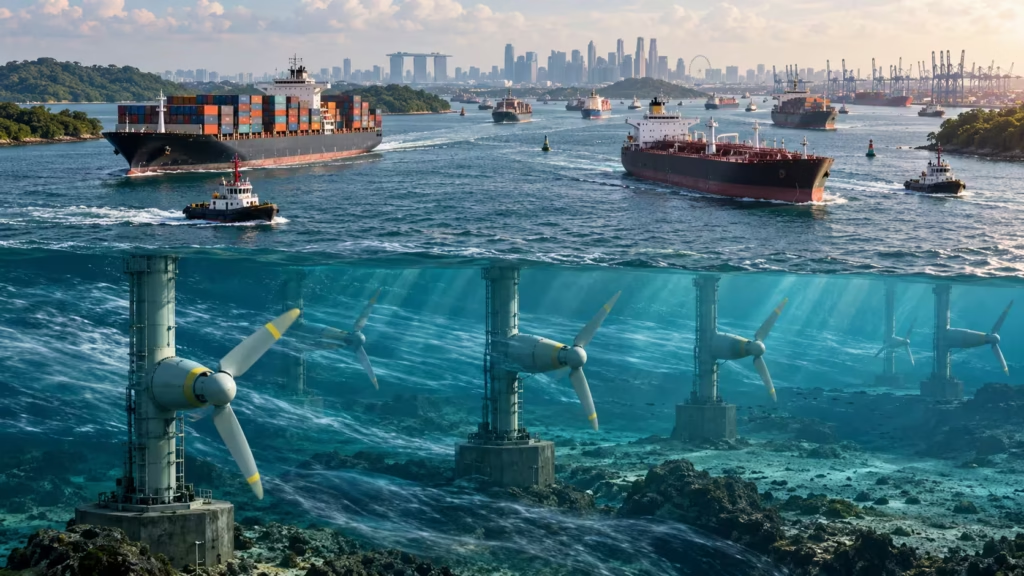
The 12.85 TWh Number That Started a Debate
In March 2026, researchers from NUS College of Design and Engineering published a study in Energy Conversion and Management estimating that tidal stream energy in Singapore could generate up to 12.85 TWh per year—approximately 22% of the nation’s 2023 electricity demand—while avoiding an estimated 6.03 million tonnes of CO₂ annually.
The study used a high-resolution FVCOM hydrodynamic model with near-channel grid resolution of about 50 meters, driven by 13 tidal constituents and validated against Maritime and Port Authority tide-gauge data from ten stations.
The Government’s Reality Check
Two months later, Minister of State for Trade and Industry Gan Siow Huang delivered a parliamentary reply that reframed the discussion. “There are no current plans to deploy tidal energy,” she said. “Much of Singapore’s territorial waters is used for ports, anchorage, and shipping lanes.” The government estimated that realistically harnessable tidal energy amounts to less than 1% of Singapore’s energy needs.
The minister noted that the NUS study did not account for existing sea-space uses or cost-effectiveness.
Why the Numbers Diverge
The gap between 22% and 1% is not a dispute over physics—it is a dispute over assumptions. The NUS model identified hotspots in narrow straits where flow accelerates around islands and through channels. But those same channels are among the world’s busiest shipping lanes.
The NUS researchers themselves acknowledged this tension. They tested nine tidal current turbine designs and found a practical trade-off: large turbines produce more energy per device but are constrained by depth and siting, while smaller low-cut-in-speed turbines can be deployed across more feasible areas.
You may also like
-
When Travel Doesn’t Go as Planned: How Travellers Are Navigating Disruptions in 2026
-
LawClip Asia Launches to Cover Legal and Regulatory Developments Across Asia
-
Astaka Launches SOL HealthTech Brand, Aiming To Capitalise On Growing Demand For Indoor Air Quality Solutions Across Asia
-
Three notes from Hangzhou: Sanct Social founder on how China backs its start-ups, one task per city, and a whole city out to see the moon
-
Sixteen companies, four ministries and agencies, two associations: inside the Indonesian delegation to Hangzhou’s Global Digital Trade Expo