 BRI Finance Catat Pertumbuhan Pembiayaan Modal Kerja 23,3%, Permintaan Aset Produktif Tetap Aktif
 Sambut Usia ke-43, BRI Finance Gandeng DLH DKI Jakarta Dorong Pengelolaan Sampah di Srengseng Sawah
 BRI Finance Perkuat Pembiayaan Alat Berat, Bidik Peluang dari Proyek Energi Terbarukan
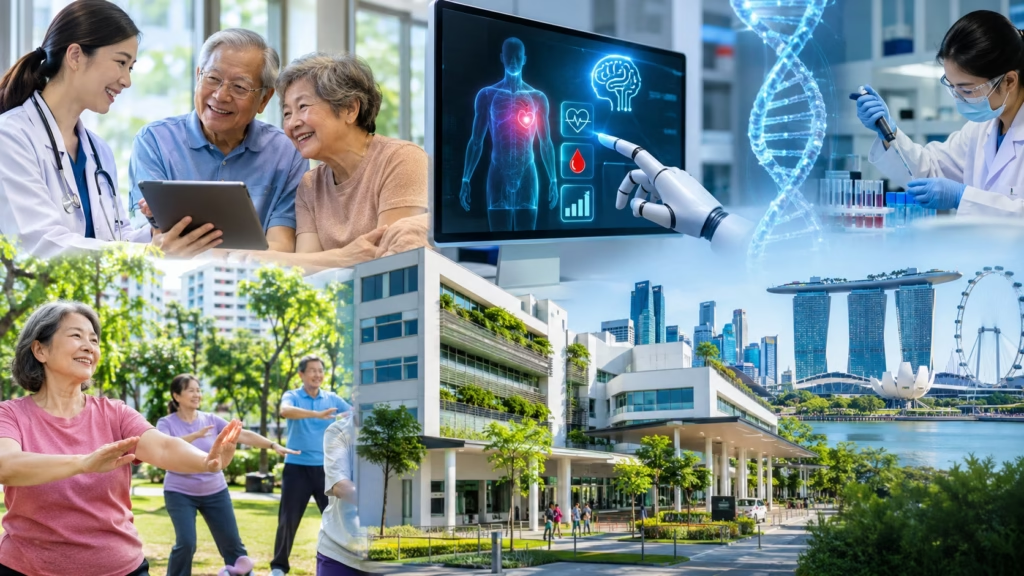
Singapore is reshaping its healthcare industry by integrating digital technology, preventive medical services and patient-centred treatment into its national healthcare system. In 2026, this transformation is becoming increasingly important as the country faces growing demand for chronic disease management and elderly care.
The emerging healthcare model emphasises early medical intervention, improved coordination between healthcare providers and wider access to services outside conventional hospitals. From artificial intelligence to advanced genomic research, Singapore is investing in solutions designed to improve treatment efficiency while supporting healthier lives.
Healthier SG Encourages Long-Term Medical Monitoring
A central component of Singapore’s healthcare strategy is Healthier SG, which encourages eligible residents to register with participating family doctors and receive personalised healthcare guidance.
The programme provides individual health plans covering regular medical screenings, vaccinations, nutrition, physical activity and management of existing medical conditions.
By establishing ongoing relationships with primary care providers, patients can receive more consistent monitoring and identify potential complications before they become serious.
Singapore’s Ministry of Health reported that Healthier SG enrolment reached 1.5 million residents by August 2026, equivalent to 61% of the eligible population.
Meanwhile, the proportion of residents participating in recommended chronic disease screening increased from 62.6% in 2023 to 71.5% in 2025.
These figures highlight the increasing importance of preventive healthcare, although longer-term medical outcomes will be needed to measure its full effectiveness.
AI Technology Supports More Accurate Risk Assessment
Artificial intelligence is becoming an important tool for improving healthcare decision-making in Singapore.
The government has announced plans to deploy ACE-AI, a predictive technology developed by national health technology agency Synapxe.
The system examines information such as age and medical history to identify individuals with an elevated likelihood of developing diabetes or high cholesterol within three years.
According to the Ministry of Health, patients classified as high risk by the system have a predicted probability exceeding 75% of receiving one of those diagnoses.
Implementation is expected to begin in early 2027, allowing participating doctors to recommend more frequent subsidised cardiovascular-risk screening for eligible patients.
This approach could improve the efficiency of preventive services by directing additional medical attention towards people who need it most.
Precision Medicine Creates New Possibilities for Treatment
Alongside artificial intelligence, Singapore is expanding research into personalised medicine through its National Precision Medicine programme.
The initiative’s third phase seeks to recruit 400,000 to 450,000 additional participants for genomic sequencing.
Researchers aim to identify genetic characteristics associated with disease development and treatment responses across the country’s diverse population.
The programme could eventually support more targeted medical interventions, including improved management of hereditary conditions and certain cancers.
Further details about Singapore’s genomic ambitions were outlined in the Ministry of Health’s October 2026 precision health address.
Expanding Healthcare Services Within Communities
Another important development involves bringing healthcare services closer to residential areas.
Under Age Well SG, four Age Well Neighbourhoods are being developed progressively in Toa Payoh, Bedok, Bukit Panjang and Tiong Bahru-Redhill.
More than 110,000 older residents are expected to benefit from enhanced community health posts, active-ageing facilities, home personal care and senior-friendly infrastructure.
These services are designed to help older adults manage health conditions while remaining socially connected and independent.
Singapore’s ongoing healthcare modernisation illustrates how medical innovation and community-based support can complement one another. By strengthening prevention, personalised treatment and healthcare accessibility, the country is developing a more integrated system capable of responding to increasingly complex medical needs.
You may also like
-
Mining in Indonesia: What Foreign Investors Must Get Right Before the First Shovel
-
Morus and BUZUD Announce MOU Before Japanese and Singaporean Government Leaders at Japan–Singapore 60th Anniversary Agri-Food Innovation Ceremony
-
Five weeks after launch, Sanct Social has more than 1,000 people on the platform and is taking its table from Singapore to Jakarta to a campus in Tangerang
-
Singapore-registered social app Sanct Social asked 112 students at a Jakarta school fair who is still there for them, and many came back with their loved ones
-
Tutor City Nominated for Best Tuition Centre & Agency at theAsianparent Awards Singapore 2026