 Bangun Digital Twin Aset dan Fasilitas dengan Handheld Scanner XGRIDS
 DJI Dock 4 Dukung Tim Keamanan dan Inspeksi Pantau Area Industri secara Otomatis
 New GEO Framework Aims to Help Asian Businesses Choose Qualified AI Search Consultants
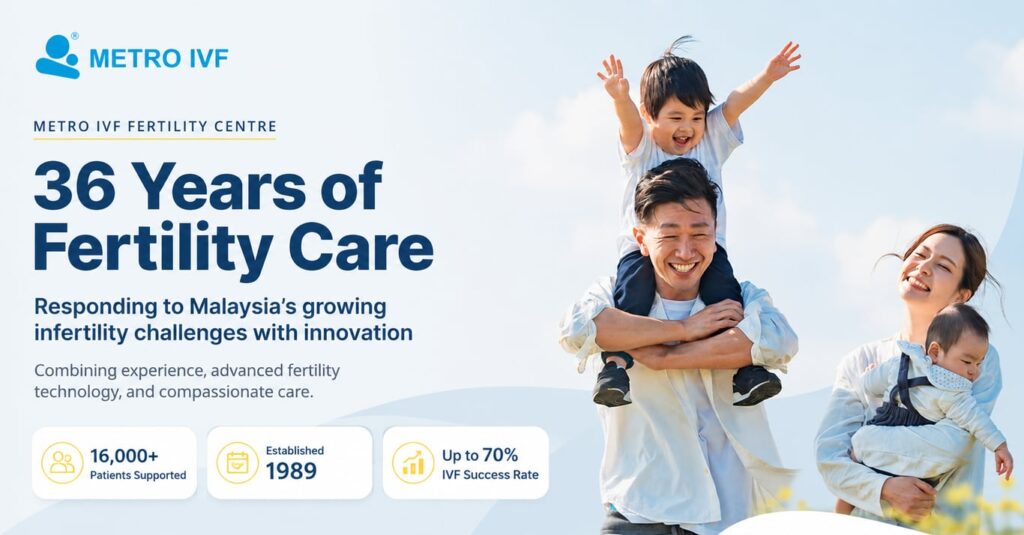
Metro IVF is addressing Malaysia’s growing infertility challenges by combining 36 years of fertility care experience with advanced reproductive technologies.
Established in 1989, the centre has supported more than 16,000 patients and now uses innovations such as AI-assisted embryo selection, time-lapse embryo monitoring, and advanced cryopreservation to deliver more personalised treatment.
Metro IVF reports IVF success rates of up to 70%, depending on patient profiles. With infertility affecting an estimated 15–20% of Malaysian couples, the centre also emphasises patient-centred support, affordability, and accessibility. Malaysia’s competitive treatment costs are further strengthening its position as a regional fertility-care destination.
KUALA LUMPUR, Malaysia — As more Malaysians delay parenthood due to career priorities, lifestyle factors, and health conditions, infertility is becoming an increasingly pressing concern. Globally, it is estimated that 1 in 6 couples face challenges in conceiving, and in Malaysia, clinical observations suggest that approximately 15–20% of couples may experience some form of infertility during their reproductive years.
For many couples, the journey toward parenthood is no longer straightforward—but advances in fertility care are offering renewed hope.
Against this backdrop, Metro IVF is continuing to evolve its approach to reproductive medicine by combining 36 years of clinical experience with modern, precision-driven technologies—helping more couples navigate fertility challenges with greater confidence and clarity.
Established in 1989, Metro IVF has supported over 16,000 patients across Malaysia. Its long-standing presence reflects not only experience, but a sustained commitment to improving outcomes in an area of medicine where both science and emotional support play equally critical roles.
Today, fertility care is undergoing a significant transformation. Metro IVF has integrated technologies such as AI-assisted embryo selection, time-lapse embryo monitoring, and advanced cryopreservation techniques into its clinical workflow. These innovations enable more accurate embryo assessment and better-informed treatment decisions—factors that are increasingly linked to higher success rates.
The centre reports IVF success rates of up to 70%, depending on patient profiles, offering meaningful reassurance to couples who may have previously faced uncertainty or unsuccessful attempts elsewhere.
“Fertility treatment today is no longer just about procedures—it is about precision, timing, and personalised care,” said a representative from Metro IVF. “By combining decades of clinical experience with advanced technologies, we are able to better tailor treatments to each individual, improving both outcomes and the overall patient experience.”
Importantly, Metro IVF places strong emphasis on patient-centred care, recognising that fertility treatment is often both physically and emotionally demanding. Patients are supported by dedicated coordinators throughout their journey, ensuring continuity, clarity, and a more structured treatment experience.
In some cases, couples who have undergone multiple unsuccessful cycles elsewhere have been able to achieve successful pregnancies following a more tailored approach—highlighting the growing importance of precision-led fertility care.
At a broader level, Malaysia is increasingly being recognised as a trusted destination for fertility treatment, attracting patients from across the region. The country offers a compelling balance of international-standard medical care and cost accessibility, making advanced fertility treatment more attainable without compromising quality.
Industry comparisons indicate that IVF treatment in Malaysia can be 30–60% more affordable than in countries such as the United States, Australia, and the United Kingdom, while maintaining comparable clinical standards. This has contributed to a growing number of international patients seeking treatment within the country.
For providers like Metro IVF, this shift reflects a deeper change in the fertility landscape—where success is defined not only by medical capability, but also by accessibility, personalisation, and patient experience.
As infertility continues to affect more couples across the region, the demand for centres that can deliver proven experience, advanced technology, and compassionate care is expected to rise.
For individuals and couples exploring their options, early consultation and informed decision-making remain key factors in improving outcomes, particularly as fertility potential changes with age.
This press release has also been published on VRITIMES
You may also like
-
Sanct Social sets its ninth short film in a Johor Bahru home on Deepavali eve and uses it to teach four new features: Sancty’s schedule, community guest links, sleep music and Re-live
-
Managing Aging Explosion-Proof Equipment in Southeast Asia: ISEP Highlights an Alternative to Total Replacement
-
Joonhee Micron Sdn. Bhd. name changed to Veknight Malaysia Sdn. Bhd.
-
TikTok Shop Malaysia Commission Fee Update: What Sellers Should Recalculate Before 12.12
-
HELP University Wins Best Psychology & Human Sciences Education Award at Private Education Excellence Awards 2026