 5 Ide Oleh-Oleh dari Jakarta yang Bisa Jadi Buah Tangan
  Case Valker Luggage Gains Momentum Among Malaysian Travelers with Durable, TSA-Approved Designs
  Carziqo Launches ER-BX Autonomous Ride-Hailing Operations in San Francisco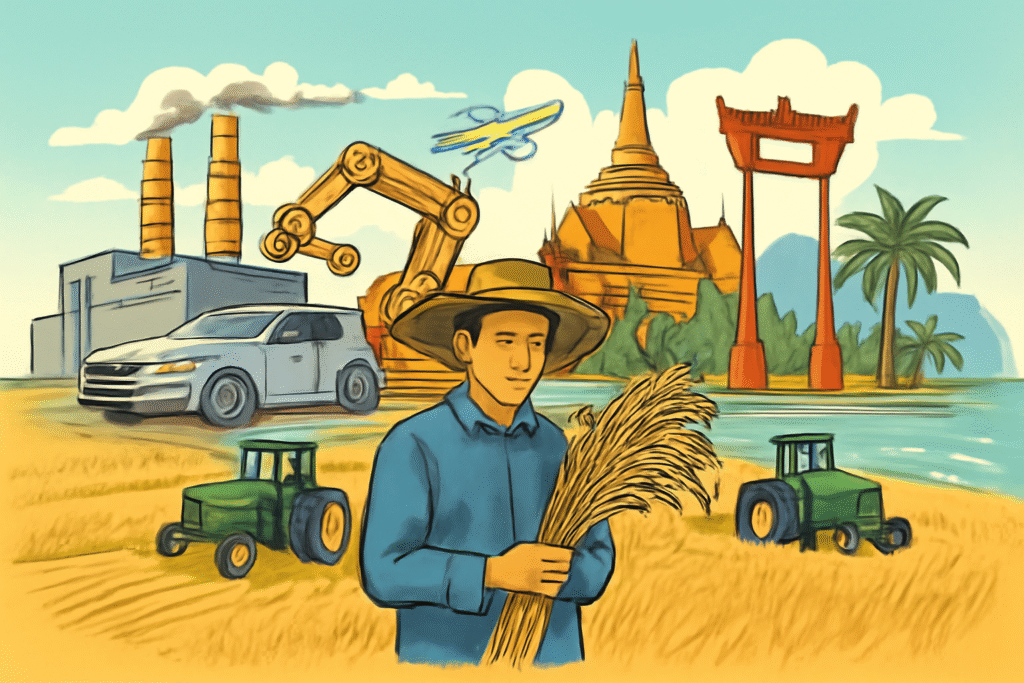
Thailand’s economic success is driven by the strong contributions of three major sectors: agriculture, industry, and tourism. Each of these sectors has developed over time, adapting to global trends and internal demands. Understanding how these sectors interact provides a clearer picture of Thailand’s economic structure and growth.
Agriculture: A Vital Sector in Thailand’s Economy
Agriculture has historically been the backbone of Thailand’s economy. With its abundant natural resources, Thailand is one of the largest producers and exporters of agricultural products such as rice, rubber, sugar, cassava, and seafood. Rice remains the most significant agricultural export, and Thailand is one of the top exporters worldwide.
Although the share of agriculture in GDP has decreased in recent years, it remains a significant source of income and employment, particularly in rural areas. The sector is highly sensitive to environmental factors such as weather and climate change, which can affect crop yields and production levels. To combat these challenges, Thailand has focused on agricultural modernization through technological innovations and improving sustainability practices in farming.
The Role of Industry in Thailand’s Economic Growth
Thailand’s industrial sector has expanded rapidly over the past few decades, moving from agriculture-based to manufacturing-based economic growth. The country has become an industrial powerhouse in Southeast Asia, with key industries such as automotive manufacturing, electronics, petrochemicals, and food processing.
The automotive industry is a critical component of Thailand’s industrial base, and the country is often referred to as the “Detroit of Asia” due to its significant production of vehicles. Thailand also plays a central role in the global electronics market, producing electronic components such as semiconductors and consumer devices. The government’s focus on “Thailand 4.0” aims to shift the economy toward high-tech industries like artificial intelligence, robotics, and biotechnology, which will help diversify the industrial sector and create higher-paying jobs.
Tourism: A Cornerstone of Economic Stability
Tourism has long been a driving force in Thailand’s economy, contributing to the nation’s GDP and job creation. With its scenic landscapes, cultural heritage, and famous hospitality, Thailand attracts millions of international visitors every year. In 2019, the country hosted over 39 million tourists, a number that highlights the importance of tourism to the economy.
The tourism sector supports a wide range of industries, from hotel chains and tour operators to restaurants and transportation services. The government continues to invest in promoting tourism, diversifying its offerings to attract various types of visitors, including those interested in luxury travel, adventure tourism, and eco-tourism.
Efforts to boost sustainable tourism, including promoting responsible travel practices and preserving natural resources, have been increasingly emphasized. These efforts not only help maintain Thailand’s appeal as a tourist destination but also support local communities and environments.
Conclusion
In conclusion, Thailand’s economy is characterized by the crucial roles played by agriculture, industry, and tourism. While agriculture continues to sustain rural livelihoods, industrial growth is shifting the country toward greater technological advancement and global competitiveness. Tourism remains a cornerstone of the economy, bringing in substantial revenue and supporting millions of jobs. Together, these three sectors ensure a diverse and resilient economic landscape for Thailand’s future.
You may also like
-
VRITIMES Thailand ร่วมเป็น Media Partner งาน 55th Intrigue MAdVerse Bangkok พร้อมแนะนำแพลตฟอร์มบนเวที
-
“School Trip: Joined a Group I’m Not Close To” ซีซัน 2 กำลังจะมา! ย้อนดู ซีซัน 1 แบบมาราธอน
-
LPIXEL จับมือ VNPT-IT เป็นพันธมิตรเพื่อให้บริการ AI สำหรับสนับสนุนการวินิจฉัยจากภาพทางการแพทย์ “EIRL” ในประเทศเวียดนาม
-
Kidz and Kitz เสริมทัพพอร์ตฯ ป๊อปคัลเจอร์ คว้าสิทธิ์ MANYC ค่ายการ์ดสะสมระดับพรีเมียม นำเข้า 3 IPs ยักษ์ยอดฮิต จากญี่ปุ่น ลุยตลาดไทย
-
CUTE TAMAGON กับการเปลี่ยนอารมณ์ในชีวิตประจำวันให้กลายเป็นคาแรกเตอร์ที่คนอยากสะสม