 Krakatau International Port Pastikan Kesiapan Rantai Pasok Baja Dukung Program Hilirisasi Krakatau Steel Group
  Öhlins ยกระดับสมรรถนะรถ Harley-Davidson ตระกูล Touring ต่อยอดความสำเร็จจากการแข่งขัน Bagger ระดับโลก
  PEKAN HALAL INDONESIA 2026 INTEGRASIKAN INDUSTRI HALAL DAN PENDIDIKAN GLOBAL DALAM SATU PLATFORM STRATEGIS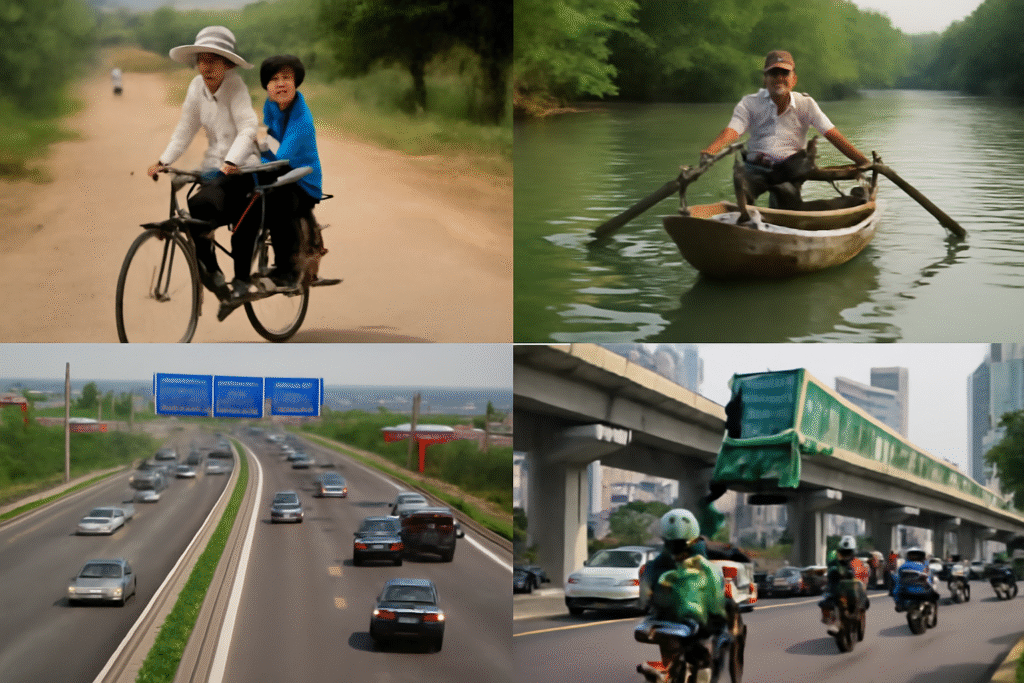
Vietnam’s transportation infrastructure has come a long way, from its traditional, minimal road systems to a modern network that now supports the rapid pace of urbanization and economic development. The country’s transportation evolution reflects its history, culture, and ambition for future growth, focusing on improving mobility and reducing the environmental impact of transport.
Historically, transportation in Vietnam relied heavily on non-motorized modes such as bicycles, rickshaws, and boats. These methods were particularly common in rural areas and along the Mekong Delta, where waterways served as the primary transport routes. Urban centers like Hanoi and Ho Chi Minh City had basic road networks but faced significant traffic challenges as populations grew.
The pivotal moment in the transportation sector came with the Doi Moi reforms in the late 1980s, which encouraged private enterprise and laid the groundwork for the country’s infrastructural expansion. As Vietnam’s economy grew, so did the demand for better transportation systems. By the 1990s, Vietnam saw an explosion in motorbike ownership, with the motorbike becoming the most common form of transport. This was particularly evident in cities, where motorbikes could navigate through crowded streets more easily than cars.
In the 2000s, the government focused on improving road infrastructure, with new highways and national roads connecting cities and provinces. This modernization of the road network helped to reduce travel time, boost trade, and increase mobility within the country. The development of industrial zones and commercial hubs also drove the need for efficient logistics networks.
The next phase of Vietnam’s transport revolution centered around mass transit. With rapidly growing urban populations, the government invested in large-scale transit projects like the Hanoi Metro and the Ho Chi Minh City Metro. The Hanoi Metro, which opened in 2021, provides a modern and efficient alternative to the overcrowded streets and motorbike-dominated traffic. Once Ho Chi Minh City’s metro is completed, it will similarly ease the burden of congestion.
Public transportation has also benefited from the rise of technology. Ride-sharing services like Grab and Be, which allow users to book a ride through a mobile app, have become ubiquitous in major cities. These services reduce the need for private cars, help alleviate traffic, and offer an affordable and convenient transportation option for residents.
Vietnam’s transportation system is continuously evolving with a clear focus on sustainability. Electric vehicles, better public transit options, and smart traffic management systems are being incorporated into the urban landscape, aiming to reduce carbon emissions and support a growing, mobile population.
You may also like
-
Kỳ thi năng lực tiếng Nhật (PJC Bridge)được mở rộng tại 15 quốc gia trong bối cảnh du học sinh nước ngoài đang gia tăng – giúp mở rộng cơ hội chứng minh năng lực tiếng Nhật.
-
Khám phá tương lai ngành nguyên liệu thực phẩm & đồ uống tại Fi Vietnam 2026
-
SusHi Tech Tokyo 2026 – Hội nghị Đổi mới Toàn cầu Lớn nhất Châu Á sẽ được tổ chức tại Tokyo Thúc đẩy các Thành phố Bền vững thông qua Công nghệ Cao
-
ALPHA NODE CIRCLE VÀ ĐỊNH HƯỚNG KẾT NỐI CHIẾN LƯỢC TRONG NGÀNH HOSPITALITY VIỆT NAM 2026
-
Nơi những runner được sinh ra, gặp gỡ và trưởng thành. “ALPEN RUN” — thương hiệu cộng đồng chạy bộ mới của Alpen sẽ khai trương cửa hàng đầu tiên tại Tokyo Metropolitan Meiji Park vào thứ Sáu, ngày 24 tháng 4.