 5 Ide Oleh-Oleh dari Jakarta yang Bisa Jadi Buah Tangan
  Case Valker Luggage Gains Momentum Among Malaysian Travelers with Durable, TSA-Approved Designs
  Carziqo Launches ER-BX Autonomous Ride-Hailing Operations in San Francisco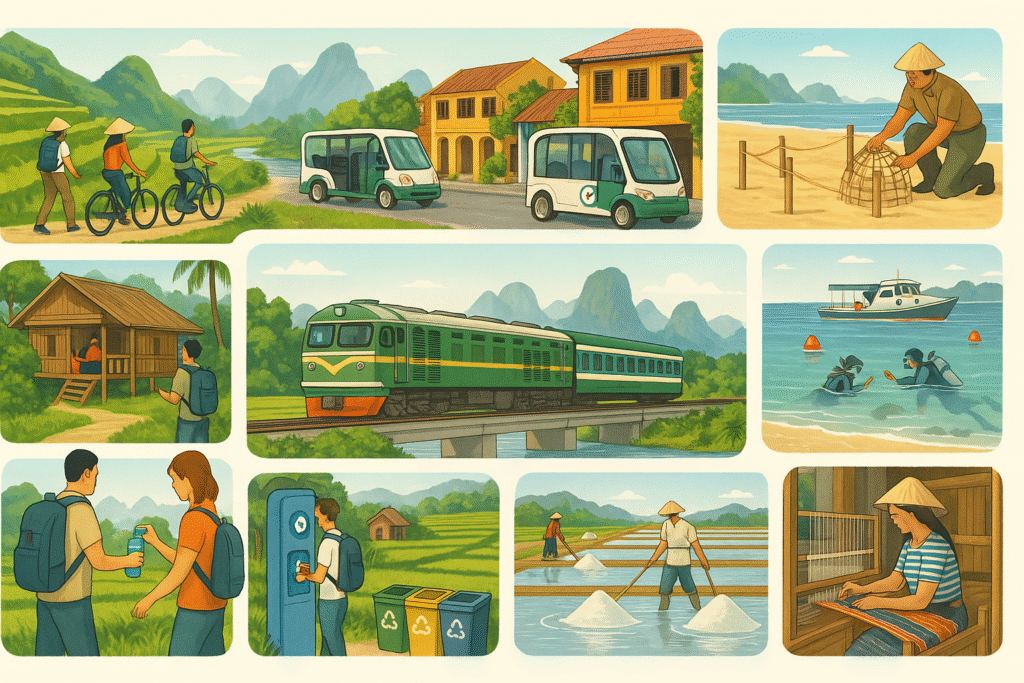
A single Vietnam journey can move from cloud‑threaded ridges to warm turquoise seas. To keep those places thriving, build a plan that respects carrying capacity, strengthens local livelihoods, and minimizes pollution without sacrificing wonder.
Begin with route and timing. Cluster nearby regions to limit flights: Hanoi with Ninh Binh and Lan Ha Bay; Hue with Hoi An and the Cham Islands; Ho Chi Minh City with Can Gio mangroves or the Mekong. The Reunification railway is the low‑carbon backbone between clusters. Travel in shoulder seasons to reduce peak pressure on trails and reefs.
Choose stays that publish specifics. Look for properties with solar water heating, shaded courtyards that cut air‑conditioning loads, wastewater treatment, and refill stations. Ask what percentage of staff come from surrounding villages and whether there’s a formal training pathway. Transparent answers are a positive signal.
On mountains and terraces, local knowledge keeps landscapes intact. Book hikes with guides from communities in Sapa, Ha Giang, or Y Ty. They know which paths avoid collapsing berms, which customs govern dress and photography, and when landslides are likely after storms. Purchase textiles and crafts from women’s cooperatives with clear pricing that lists wages or community funds.
Caves and forests require a lighter touch. In Phong Nha–Ke Bang, operators set group caps and use low‑impact lighting; touching formations is off‑limits. In Cuc Phuong or Cat Tien, stay on waymarked trails, lower voices, and avoid playback for bird calls. Night safaris should stick to designated tracks to protect leaf litter and nocturnal species.
Coastal waters are resilient only when treated with care. Dive or snorkel with guides who teach neutral buoyancy and supply reef‑safe sunscreen. Boats should tie to mooring buoys rather than drop anchors. On turtle beaches in Con Dao, red‑light protocols and ranger briefings are non‑negotiable. In Hoi An’s coconut groves and lagoons, prefer quiet paddles over loud engines that disturb wildlife.
Your daily habits matter. Carry a filter bottle and refuse single‑use straws and cups. Sort recyclables if bins are provided. Order plant‑forward dishes—easy in a cuisine rich with herbs and vegetables—and ask about responsible seafood. Practice a few Vietnamese greetings; small respect opens big doors.
Responsible travel here is not a sacrifice. It’s a richer way to move through Vietnam: slower trains, fuller conversations, clear water, living reefs, and mountain paths that welcome the next traveler without scars.
You may also like
-
CRNK đưa mũ bảo hiểm thông minh Hàn Quốc vào thị trường Việt Nam
-
LPIXEL hợp tác với VNPT-IT cung cấp AI hỗ trợ chẩn đoán hình ảnh y tế “EIRL” tại Việt Nam
-
LA TRỊNH atelier mang “Gods Within Her” đến Milan, kể câu chuyện về tính nữ và văn hóa Việt
-
LA TRỊNH ATELIER GIỚI THIỆU SHOW THỜI TRANG “GODS WITHIN HER” TẠI MILAN
-
Karen Barmaki: Sự cộng hưởng sáng tạo giữa lòng hang Ngọc Rồng tại AADA 2026