 Hadir di Pameran Otomotif Sumatera Barat, BRI Finance Tawarkan Promo Bunga KKB 0%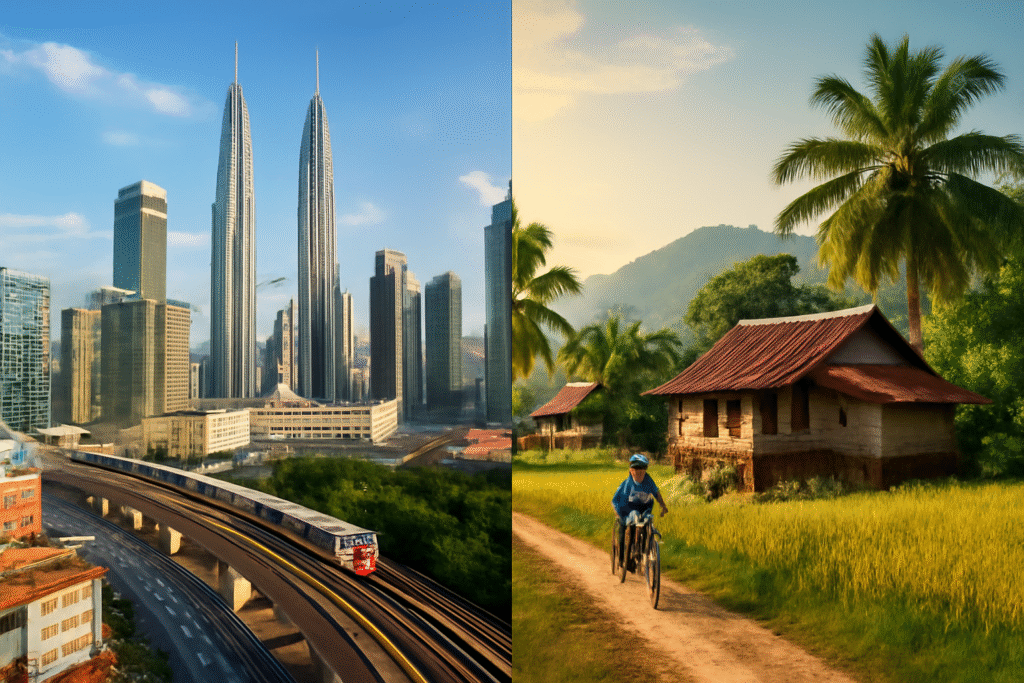
The differences between urban and rural living in Malaysia are vast, with each setting offering distinct experiences that appeal to different people based on their lifestyle preferences and priorities. Urban life in cities like Kuala Lumpur and Penang contrasts sharply with the quieter, more peaceful rural life found in regions like Pahang and Terengganu. This article explores the key differences, challenges, and opportunities associated with both ways of life.
Living in the City: Modern Conveniences and High Energy
Urban areas in Malaysia are thriving hubs of economic activity, culture, and innovation. Cities such as Kuala Lumpur, Johor Bahru, and Penang boast advanced infrastructure, a wide range of services, and a bustling lifestyle. For residents, the proximity to healthcare facilities, schools, public transport, and recreational venues is a major advantage. The convenience of having everything close by makes city living attractive for many, particularly those with demanding jobs or young families.
However, the high cost of living in cities cannot be ignored. Housing prices in major cities are often prohibitively expensive, and rental prices are high, especially in popular neighborhoods. The cost of food, transportation, and other necessities can also add up quickly, making it challenging for lower-income families. Cities also face problems such as overcrowding, noise, and air pollution, all of which detract from the overall quality of life.
Rural Life: Peaceful and Close to Nature, but Limited in Services
Rural areas in Malaysia offer a completely different experience, with slower-paced lives and a strong connection to nature. Villages in states like Kelantan, Sarawak, and Sabah provide a lifestyle that many people find appealing due to the lower cost of living, the opportunity to work in agriculture, and the tranquility of being surrounded by natural landscapes. Rural residents enjoy a close-knit community, where people know each other and often help one another out.
However, the rural lifestyle also comes with its own challenges. One of the main drawbacks of living in rural areas is the limited access to healthcare and education. Hospitals, schools, and other essential services may not be easily accessible, forcing rural residents to travel long distances for medical care or to access higher education. Employment options are also limited, with the primary source of income coming from agriculture, fishing, or small local businesses. Without access to large markets or advanced technologies, businesses in rural areas may struggle to grow.
The Difficulties of Urban and Rural Living
In urban centers, the biggest challenge is the high cost of living. Property prices have risen sharply in cities like Kuala Lumpur, putting homeownership out of reach for many. The busy lifestyle in cities can also lead to stress and burnout, as long working hours and traffic congestion take a toll on physical and mental health. Noise pollution and air pollution are persistent issues, especially in crowded metropolitan areas.
On the other hand, rural areas face difficulties such as limited infrastructure and fewer job opportunities. While life may be less stressful, the lack of access to modern conveniences such as high-speed internet and reliable public transportation can be inconvenient. Rural areas are also susceptible to natural disasters like floods, which can disrupt daily life and cause economic hardship.
Opportunities in Both Urban and Rural Settings
Despite the challenges, both urban and rural living offer unique opportunities. Cities provide a broad range of job opportunities, particularly in industries such as finance, healthcare, technology, and entertainment. Urban areas also offer a dynamic environment for entrepreneurship, with access to venture capital and a large consumer base.
Rural areas, however, present opportunities in agriculture, eco-tourism, and local handicrafts. The Malaysian government has launched various rural development programs to improve infrastructure, healthcare, and education, which can open up new avenues for business and employment in these areas. Rural Malaysia also has the potential for growth in the organic food market and sustainable farming, both of which have seen an increase in demand in recent years.
For individuals seeking a balance between career and quality of life, understanding the differences and opportunities of both urban and rural living in Malaysia can help them make an informed decision about where to live and work. Both environments offer distinct advantages, and each comes with its own set of challenges and rewards.
You may also like
-
Tenby Schools Setia Eco Park to Host the Inaugural ISP Southeast Asia Student Games 2026
-
Premium European Products Make Their Return to MIFB Malaysia
-
PERKESO Unveils Sultan Nazrin Shah PERKESO Rehabilitation Center with Fourier Rehab Technology
-
Case Valker Expands EVE2 Lineup with Spirit Red Colour Inspired by Modern Travel Trends
-
Make Your Choice – Latvian and Greek Snacks for the World Cup 2026