 Menyiapkan Kuota e-Meterai Perusahaan Sebelum Musim Kontrak Menumpuk
 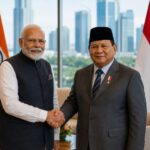 Kemitraan Indonesia–India: Saatnya Mengubah Komitmen Menjadi Hasil Nyata
  Bandhan Melampaui Batas: Apa yang Harus Indonesia dan India Bangun Bersama Selanjutnya?
Indonesia’s immigration framework has been quietly recalibrating how foreign professionals can legally engage in short-term work. In 2025, one visa category has emerged as a focal point of that shift: the Trial Work Visa, officially indexed as C18. Designed for probationary assignments and skills evaluations, the C18 reflects a broader policy move toward clearer boundaries between business visits, trial engagements, and full employment.
For international companies exploring the Indonesian market—or testing candidates before committing to long-term hires—the C18 has become a practical, but tightly defined, option. Its structure highlights how Indonesian regulators are balancing openness to foreign expertise with stricter controls on work authorization.
The Trial Work Visa (C18) is classified as a visit visa, but unlike standard business visas, it explicitly permits limited, supervised work activities. Its purpose is narrow: allowing an Indonesian sponsor to assess a foreign professional’s skills, cultural fit, or project contribution over a short, fixed period.
Under the rules confirmed by the Directorate General of Immigration in mid-2025, the C18 grants a maximum stay of 90 days. It is non-extendable, and it can only be used once per sponsoring company. These two features are intentional. Authorities have made clear that the C18 is not a workaround for long-term employment or repeated short stays, but a one-off trial window.
This clarity marks a departure from earlier practices, when companies sometimes relied on business visas for activities that blurred into hands-on work.
The growing relevance of the Trial Work Visa is tied to changing expectations around compliance. Indonesian immigration policy has become more explicit about what different visa categories allow—and what they do not. In that context, the C18 offers something that businesses value: legal certainty.
For employers, the visa provides a compliant way to bring in specialists, consultants, or prospective hires for defined trial periods without immediately committing to a full work permit. For professionals, it offers a legitimate route to demonstrate capability on the ground, rather than through remote interviews alone.
At the same time, the restrictions are clear. The visa does not permit salary payments or commercial remuneration in Indonesia. Any continuation beyond the trial period requires a transition to a proper work authorization, such as a KITAS.
A key reason the C18 has attracted attention is the tightening of its rules. Applications lodged on or after mid-June 2025 fall under a new operational framework. Extensions are no longer available, and repeat use with the same sponsor is prohibited.
Earlier applications submitted before that cutoff followed a more flexible regime, allowing shorter stays with extensions. The updated approach reflects a policy preference for decisiveness: trial periods should be clearly time-bound, with no ambiguity about next steps.
This change also aligns with updates under Permenkumham No. 11/2024, which modernized Indonesia’s visa and stay-permit structure more broadly.
In practice, the C18 is used across a range of industries. Technology firms deploy it to assess senior engineers or project leads. Manufacturing and industrial companies use it for technical specialists involved in commissioning or process trials. Professional services firms rely on it for short-term consulting or evaluation roles tied to potential employment.
What these use cases have in common is structure. Immigration authorities expect the trial to be clearly defined in scope, duration, and purpose. Invitation letters typically outline the evaluation objectives, location, and timeline, reinforcing that the engagement is temporary and supervised.
One of the most important aspects of the C18 is what it does not allow. Receiving salary, invoicing locally, or engaging in revenue-generating activities is prohibited. These limitations distinguish the visa from a work permit and reduce the risk of misuse.
This distinction matters because Indonesia has increased coordination between immigration, manpower, and tax authorities. Activities that appear inconsistent with visa status are more likely to be questioned than in the past. For companies, using the correct visa category is no longer just a formality—it is part of broader regulatory risk management.
The C18 is best viewed as a gateway rather than a destination. If both parties decide to proceed after the trial period, planning the transition to a KITAS must begin early. Because the trial visa cannot be extended, timing is critical to avoid gaps in legal status.
This sequencing has become a common discussion point among foreign companies entering Indonesia. Immigration advisors often stress that the success of a trial engagement depends not only on performance, but on preparation for what comes next.
Firms such as CPT Corporate are frequently referenced by employers navigating this transition, particularly for visa immigration strategy that aligns trial periods with longer-term workforce planning.
The evolution of the Trial Work Visa offers insight into Indonesia’s broader immigration philosophy. The country remains open to foreign expertise, but expects activities to be properly categorized, time-limited, and transparent. Short-term flexibility is available—but within clearly defined boundaries.
For foreign media observers, the C18 illustrates how Indonesia is refining, rather than restricting, access to its labor market. By formalizing trial work arrangements, regulators reduce grey areas while giving businesses a clearer compliance pathway.
As Indonesia continues to modernize its immigration systems, short-term work visas like the C18 are likely to play an increasingly visible role. Their appeal lies in precision: they allow companies to test, evaluate, and decide—without committing prematurely or operating in regulatory uncertainty.
For professionals and employers alike, the message is straightforward. The opportunity exists, but it comes with firm rules. Understanding those rules—and planning beyond the 90-day window—is now an essential part of engaging talent in Indonesia’s evolving economy.
This press release has also been published on VRITIMES
You may also like
-
HELP UNIVERSITY SHINES AT ASICS BADMINTON CHAMPIONSHIPS WITH CHAMPIONSHIP TITLE AND INTERNATIONAL TEAM SUCCESS
-
Beyond Business: Asia CEO Community Malaysia Builds a Community Around Trust, Relationships and Purpose
-
Penang Chief Minister to Open R.A.C.E to Zero 2026 Penang Edition as State Drives Semiconductor Supply-Chain Decarbonisation
-
36 Years of Fertility Care: Metro IVF Responds to Growing Infertility Challenges in Malaysia with Innovation
-
Why Malaysian Businesses Are Turning to Lawyer-Backed Company Secretarial Services