 Perkuat Keandalan Jalan Tol, PT Jasamarga Tollroad Maintenance Laksanakan Rekonstruksi Perkerasan di Ruas Tol Jagorawi
  Mengelola Uang Makan Harian agar Keuangan Tetap Teratur
  Bitcoin Bangkit Lagi! BTC Tembus US$81.000, Level Ini Jadi Penentu Berikutnya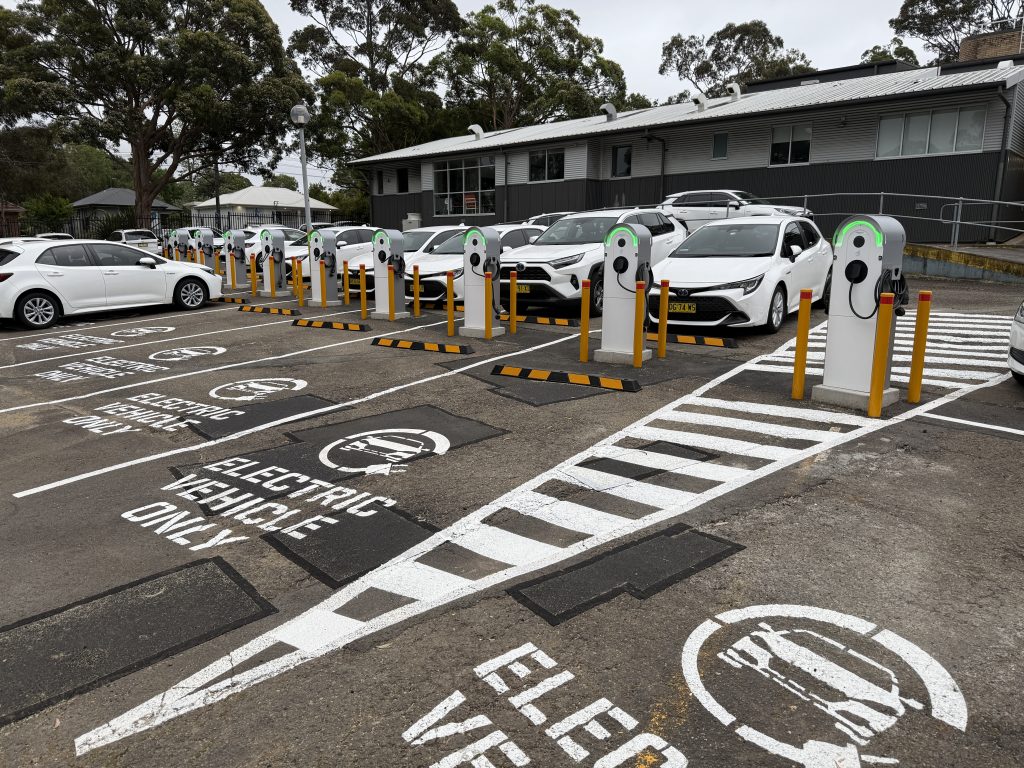
NSW Health has upgraded electric vehicle charging infrastructure across two major healthcare facilities as it works toward the NSW Government’s target of a fully electric passenger fleet by 2030.
Delivered by Aeron Group, a Schneider Electric Master eMobility EcoXpert, in partnership with Schneider Electric, the project supports the state’s Net Zero Government Operations policy, which requires all new NSW Government passenger vehicles to be electric by 30 June 2030, with 50 per cent adoption by 30 June 2026.
For NSW Health, the shift is expected to cut transport-related emissions linked to fleet operations, as well as staff, patient and visitor travel, a significant contributor to its overall carbon footprint.
Live hospital rollout
The charging upgrades were completed in 24-hour hospital environments, requiring staged delivery to avoid disruption to clinical services.
Aeron Group worked with site stakeholders to upgrade existing EV infrastructure, installing 36 Schneider Electric Pro AC chargers and 2 Pro DC chargers across the sites to support a growing staff fleet.
However, ageing digital systems posed a risk of costly electrical upgrades to accommodate increased charging demand.
Instead of undertaking major grid works, the project deployed Schneider Electric’s EcoStruxure™ EV Charging Expert Load Management System. Its Dynamic Load Management capability balances power demand across chargers in real time, preventing overload, reducing peak demand and avoiding significant infrastructure upgrades
Ben Espinoza, Managing Director at Aeron Group, said maintaining operational continuity was critical.
“These facilities operate around the clock, so our priority was delivering reliable EV charging infrastructure without disrupting staff or patient services,” Espinoza said.
“Working with Schneider Electric’s technology, we were able to overcome ageing digital infrastructure and implement Dynamic Load Management to ensure safe, stable and scalable charging.”
Electrification beyond compliance
Tim Pratt, Vice President Power Products at Schneider Electric, said the transition reflects a broader shift across essential services.
“NSW Health’s transition to electric vehicles is both a policy requirement and a health imperative. Reducing transport emissions across hospital fleets directly contributes to cleaner air and healthier communities,” Pratt said.
He added that combining smart charging infrastructure with intelligent load management enables healthcare providers to decarbonise without compromising reliability.
The rollout forms part of Schneider Electric’s wider work supporting public sector organisations with electrification and digital energy solutions.
As government agencies work toward the 50 per cent EV milestone in 2026, scalable charging infrastructure is expected to play a key role in enabling the broader fleet transition.
This press release has also been published on VRITIMES
You may also like
-
The Missing Breastfeeding Conversation: What Happens Six Months After Discharge?
-
The finishing touches on George Street’s transformation
-
Momcozy and Midwife Bianca Burge Call for Breastfeeding Support Built Around Real Life
-
UNSW Sydney launches first Enterprise Data Strategy
-
Bridging European Luxury and Southeast Asian Real Estate: Jasmine Chau Leads the Grand Finale at IFFINA+ 2026