 ACT! Project Mendorong Konsumsi Produk Berkelanjutan di Indonesia
  Friends on Sanct Social are added by meeting in person: Episode 6 follows one day in Jakarta with friends from Singapore and Malaysia
  Gratis Transfer antarbank di neobank hingga 200 Kali per Bulan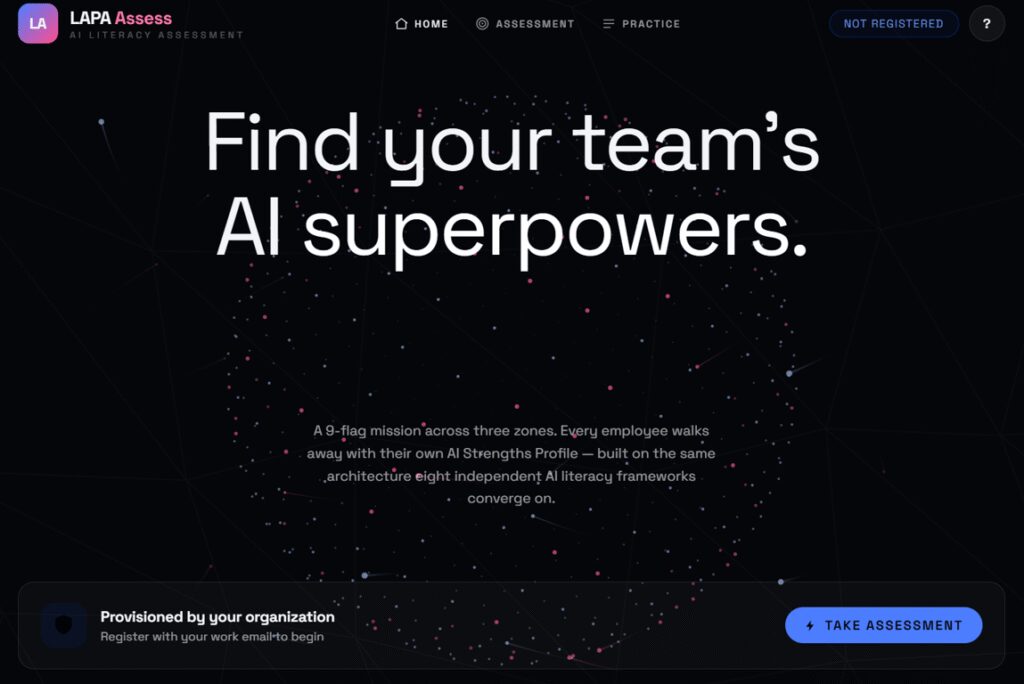
Firdaus Salim, Lapa Labs
In a recent engagement, two people were given the same task. A 50-slide pack built on 2025 material had to move into a new house design and be updated for 2027.
One person opened Claude Fable 5.1, a state-of-the-art model, and uploaded the full file, asking it to restyle and refresh everything in one step. The deck came back quickly. Dates were mixed. Charts no longer supported the argument.
The other person began with the brief. They used a “cheaper” Claude Sonnet 5, to set the 2027 narrative: what still belonged, what did not, and how the story should run. They then converted the old pack into a markdown file, text only, and used that as the source for a new deck. The finished version held together.
Both used Claude. The difference was method. One asked the model to absorb the whole problem. The other separated judgement, structure, and production, and gave the model a defined job at each stage.
That difference is easier to see on a live brief than on a quiz. It also changes with the work. A slide deck is not a spreadsheet. A spreadsheet is not an internal application. A department still needs people who can decide what must stay accurate, how the work should be sequenced, and when a model should not be used.
Malaysia’s National Guidelines on AI Governance and Ethics, known as AIGE and issued in September 2024, describe that requirement as reliability, human control, privacy, and accountability.
Those principles only become practical inside the work a team already does. Boston Consulting Group’s 2026 study found 74 percent of frontline staff using AI regularly, while only 36 percent felt adequately trained. Microsoft’s 2026 Work Trend Index ranked quality control and critical thinking as the human skills that now matter most.
Departments do not need another reminder that AI is in use. They need to know whether their people can navigate it in their own function.
That is why Lapa Labs built Assess. (https://assess.lapalabs.co/)
Assess by Lapa Labs is a short, situation-based diagnostic. People work through scenes that resemble the job: a weak output, a thread that has gone off course, a brief with hard constraints, a result that looks right until the reasoning is checked, a moment when AI should be left off.
The method follows a public marking scheme. Those sources include UNESCO, the OECD, the European Union AI Act literacy duty, the World Economic Forum, and fluency material from Anthropic, Google, and Microsoft. The design was checked against public skills evidence such as PwC’s Global AI Jobs Barometer. Assess is structured against those texts. It is not endorsed by them.
Each task is scored on fit, craft, and creativity. Nine tasks sit in three zones: Recon for diagnosis, Build for production under constraint, Watch for audit and restraint.
A person receives a private strengths profile. A department receives a team map, not a public ranking. That map shows whether the group already knows how to sequence AI on a deck, a workbook, or a build, and where coaching should go next.
The aim is practical: help each function at Lapa Labs’ partner organisations master AI in the work it actually ships.
assess.lapalabs.co
This press release has also been published on VRITIMES
You may also like
-
Premium European Products Look Ahead to New Growth Opportunities in Malaysia
-
Event Me Now Bets Big on Malaysia’s Event Industry With Zero Platform Commission at Its Core
-
The RM100 Million Gamble: How Malaysia’s 13th Malaysia Plan Is Rewriting the Rules of Deep-Sea Fishing
-
Sabah’s Blue Economy Gambit: Downstream Value and the Regional Tuna Hub Vision
-
As AI Reshapes Society, Malaysia to Host AACM 2026 to Explore the Future of Humanity