 Peduli Kesehatan Lingkungan, PTPN Group melalui Unit Riset Sungei Putih PT RPN Berkolaborasi Lakukan Fogging
  Tips Traktir Teman ketika Ulang Tahun agar Tidak Boncos
  Mengatur Keuangan Saat Punya Cicilan agar Tetap Terkendali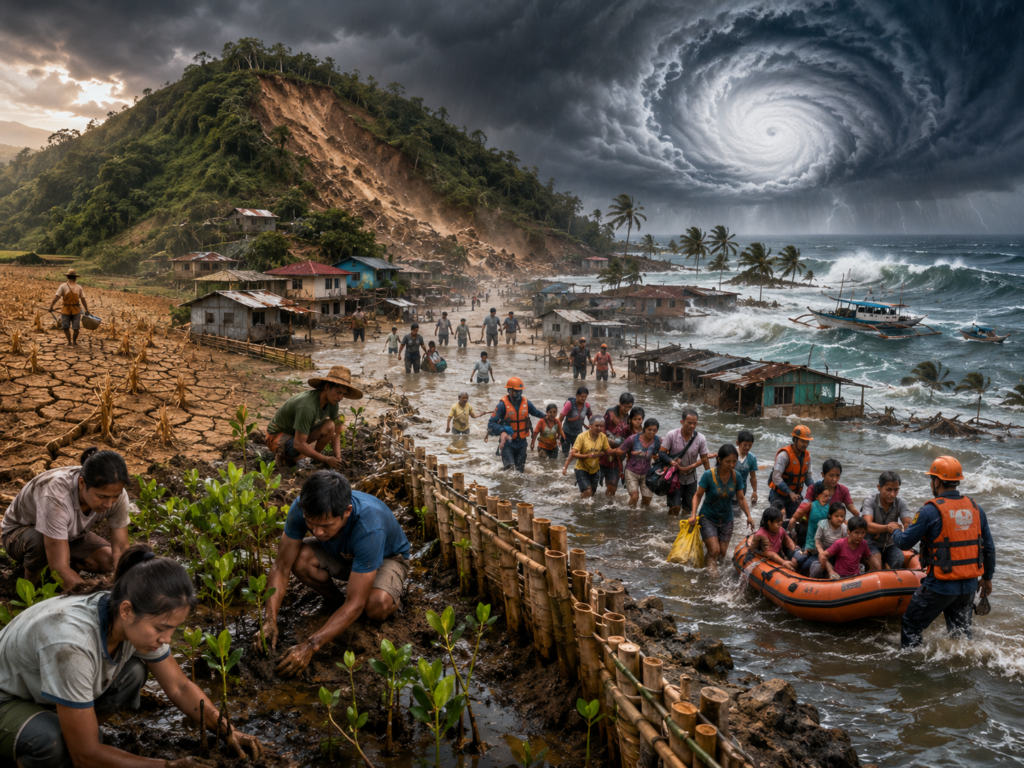
The Philippines is recognized as one of the world’s most disaster-prone countries. Its location along the Pacific Ring of Fire and the typhoon belt exposes it to recurring natural hazards such as typhoons, floods, landslides, and coastal erosion. Climate change amplifies these risks, resulting in stronger storms, more erratic rainfall, and rising sea levels, which pose serious challenges to communities and the economy.
Typhoons cause widespread destruction every year, with around 20 storms entering the Philippine area of responsibility. Global warming contributes to the increased intensity of these storms, causing heavier rainfall, strong winds, and severe flooding. Riverine and coastal communities are particularly vulnerable, often losing homes, infrastructure, and livelihoods. Storm surges threaten coastal towns, while landslides in hilly regions isolate communities and disrupt essential services.
Agriculture is heavily impacted by climate variability. Unpredictable rainfall and prolonged dry spells reduce crop yields, affecting the livelihoods of millions of farmers. Rice, corn, and coconut production are particularly vulnerable. The resulting food insecurity exacerbates poverty and places additional pressure on rural communities with limited resources to adapt.
Government agencies have established programs to mitigate disaster impacts. The NDRRMC coordinates preparedness initiatives, early warning systems, and relief operations. Local authorities also invest in resilient infrastructure, including flood control systems, reinforced shelters, and safer housing projects. Climate adaptation is increasingly incorporated into urban planning and development projects.
Community participation strengthens resilience at the grassroots level. Residents engage in disaster drills, hazard mapping, and environmental restoration projects, such as mangrove reforestation and watershed rehabilitation. NGOs support these efforts with education, technical assistance, and emergency relief programs to help vulnerable populations better prepare for disasters.
International collaboration is key to enhancing the Philippines’ adaptive capacity. Global organizations provide financial support, technical expertise, and advanced monitoring systems to improve early warning, response, and long-term climate adaptation strategies. By leveraging international resources, the country can better anticipate and respond to extreme weather events.
Effectively confronting climate risks requires a combination of government planning, community engagement, and international support. Strengthening resilience across sectors ensures that both people and ecosystems are better prepared to face the increasing challenges posed by climate change.
You may also like
-
VRITIMES Exhibits at SUPPLYCON 2026 as Official Media Partner
-
Casino Plus, official presenter ng MassKara Festival 2026; Zeinab, Moonstar88, Baby Dolls, magpapasiklab sa 3-day concert
-
Gyukatsu BGC Brings Its Signature Japanese Beef Cutlet Experience to Park Triangle Mall
-
How an AI Communication Coach Helped a First-Generation Filipina Immigrant Find Her Voice
-
44th ASEAN Ministers on Energy Meeting (AMEM) and AEBF-26 Open in Manila, Marking New Milestones in ASEAN Energy Cooperation