 Peduli Kesehatan Lingkungan, PTPN Group melalui Unit Riset Sungei Putih PT RPN Berkolaborasi Lakukan Fogging
  Tips Traktir Teman ketika Ulang Tahun agar Tidak Boncos
  Mengatur Keuangan Saat Punya Cicilan agar Tetap Terkendali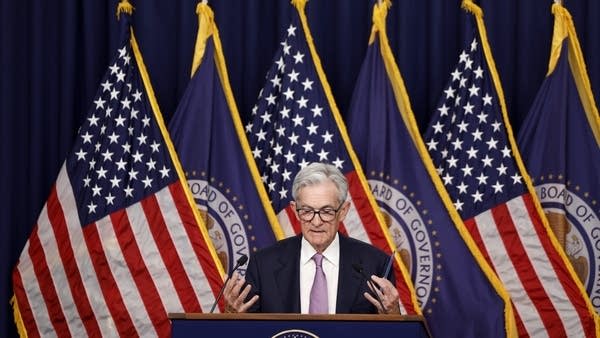
The Fed held interest rates steady at 4.25%-4.5%, as Powell signals no September cut. Dissent, tariffs, and inflation risks cloud the U.S. economic outlook.
In a widely anticipated move, the U.S. Federal Reserve’s Federal Open Market Committee (FOMC) held the benchmark federal funds rate steady at 4.25% to 4.50% during its July 30, 2025 meeting.
While the decision aligned with market expectations, it arrived with notable internal dissent and heightened geopolitical tensions, factors that could reshape the economic narrative in the months to come.
First Split Vote Since 1993
What set this meeting apart was the rare internal division within the Fed’s leadership. Governors Christopher Waller and Michelle Bowman dissented from the majority, supporting a rate cut rather than the status quo.
This marks the first time since late 1993 that multiple governors voted against a Fed decision, signaling rising tensions over the central bank’s policy trajectory amid global and domestic economic headwinds.
Powell: “No Decision Yet” on September Cut
Fed Chair Jerome Powell, in his post-meeting press conference, made it clear that no decision has been made regarding a rate change at the September meeting.
He emphasized that the central bank is in a wait-and-see mode, especially given the uncertain impact of new U.S. tariffs on global trade dynamics and inflation.
“Higher tariffs have begun to show through more clearly to prices of some goods, but their overall effects on economic activity and inflation remain to be seen,” Powell stated.
He further added that while short-term inflationary pressures from tariffs might dissipate, more persistent impacts cannot be ruled out.
“Our obligation is to keep longer-term inflation expectations well-anchored,” Powell said, highlighting the Fed’s cautious approach in guarding against an entrenched inflation cycle.
Tariffs Take Center Stage in Economic Outlook
The Fed’s decision comes against the backdrop of a shifting global trade environment. President Donald Trump recently announced a new trade pact with South Korea involving 15% tariffs on Korean goods, while American products will receive duty-free access.
Simultaneously, Trump slapped 50% tariffs on Brazilian exports, imposed new levies on copper imports, and announced 25% tariffs on Indian goods—citing India’s continued ties with Russia.
These measures are expected to have ripple effects across global supply chains, potentially stoking inflation while also impacting growth in key emerging markets.
The president’s hardline approach added market volatility, with the Dow Jones Industrial Average falling 172 points (-0.4%) following Powell’s press conference.
Treasury yields edged higher as investors reassessed the risk environment amid uncertain Fed policy direction.
GDP and Inflation: Mixed Signals
Economic data released alongside the FOMC meeting showed the U.S. economy grew by 3% in Q2 2025, a sharp rebound from Q1’s contraction. However, inflation pressures were slightly firmer than expected, supporting the Fed’s cautious stance.
The labor market remains strong, with historically low unemployment, but signs of slowing growth have begun to appear, creating a complex backdrop for monetary policy.
Earnings Season Highlights Mixed Sentiment
Amid all this, corporate earnings have painted a mixed picture. In the U.S., tech giants Meta and Microsoft delivered strong results, boosting investor sentiment.
In contrast, European automakers like Porsche and Mercedes downgraded their forecasts following a new EU-U.S. trade deal, further highlighting the uncertainty facing global markets.
Conclusion: What’s Next for the Fed and the Market?
With inflation risks from tariffs still unfolding and global economic uncertainties mounting, the Fed’s decision to pause was both strategic and cautious.
However, the dissent among policymakers and Powell’s non-committal tone about future moves indicate a growing divergence in views within the central bank, a signal that the next few months could be crucial for financial markets and the broader economy.
As traders and investors gear up for the September FOMC meeting, all eyes will be on incoming data, geopolitical developments, and tariff effects to gauge whether a rate cut, or further hold, is on the horizon.
You may also like
-
Astaka Launches SOL HealthTech Brand, Aiming To Capitalise On Growing Demand For Indoor Air Quality Solutions Across Asia
-
Three notes from Hangzhou: Sanct Social founder on how China backs its start-ups, one task per city, and a whole city out to see the moon
-
Sixteen companies, four ministries and agencies, two associations: inside the Indonesian delegation to Hangzhou’s Global Digital Trade Expo
-
Sanct Social joins Indonesian delegation to China’s Global Digital Trade Expo, explores the smart glasses and AI models already on sale there
-
YouHealth Singapore Highlights a Personalised TCM Approach to Sustainable Weight Management