 Peduli Kesehatan Lingkungan, PTPN Group melalui Unit Riset Sungei Putih PT RPN Berkolaborasi Lakukan Fogging
  Tips Traktir Teman ketika Ulang Tahun agar Tidak Boncos
  Mengatur Keuangan Saat Punya Cicilan agar Tetap Terkendali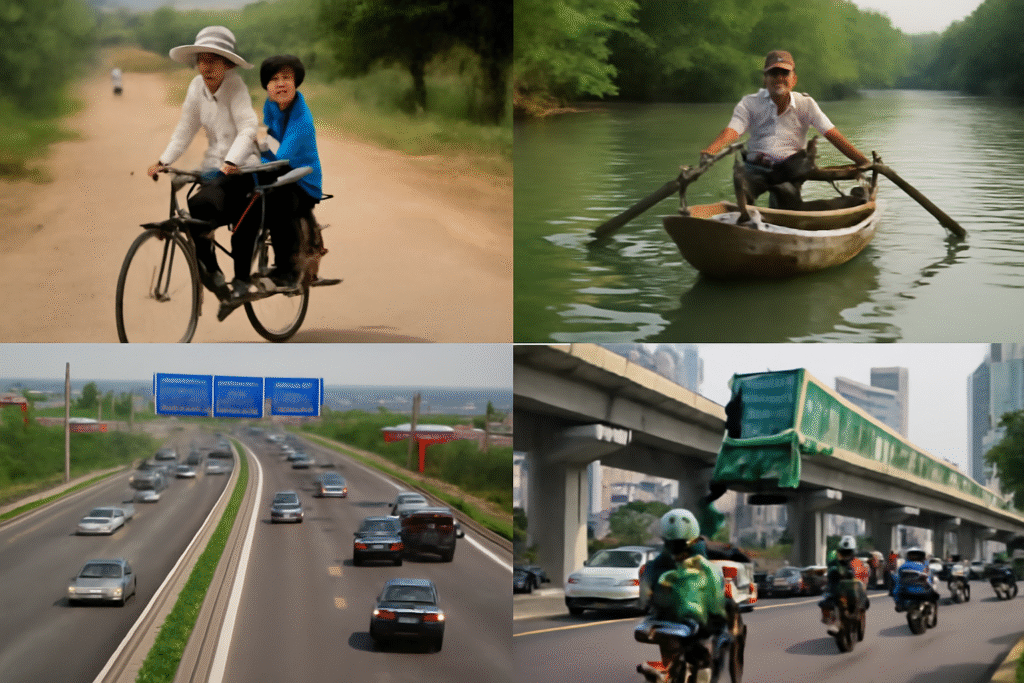
Vietnam’s transportation infrastructure has come a long way, from its traditional, minimal road systems to a modern network that now supports the rapid pace of urbanization and economic development. The country’s transportation evolution reflects its history, culture, and ambition for future growth, focusing on improving mobility and reducing the environmental impact of transport.
Historically, transportation in Vietnam relied heavily on non-motorized modes such as bicycles, rickshaws, and boats. These methods were particularly common in rural areas and along the Mekong Delta, where waterways served as the primary transport routes. Urban centers like Hanoi and Ho Chi Minh City had basic road networks but faced significant traffic challenges as populations grew.
The pivotal moment in the transportation sector came with the Doi Moi reforms in the late 1980s, which encouraged private enterprise and laid the groundwork for the country’s infrastructural expansion. As Vietnam’s economy grew, so did the demand for better transportation systems. By the 1990s, Vietnam saw an explosion in motorbike ownership, with the motorbike becoming the most common form of transport. This was particularly evident in cities, where motorbikes could navigate through crowded streets more easily than cars.
In the 2000s, the government focused on improving road infrastructure, with new highways and national roads connecting cities and provinces. This modernization of the road network helped to reduce travel time, boost trade, and increase mobility within the country. The development of industrial zones and commercial hubs also drove the need for efficient logistics networks.
The next phase of Vietnam’s transport revolution centered around mass transit. With rapidly growing urban populations, the government invested in large-scale transit projects like the Hanoi Metro and the Ho Chi Minh City Metro. The Hanoi Metro, which opened in 2021, provides a modern and efficient alternative to the overcrowded streets and motorbike-dominated traffic. Once Ho Chi Minh City’s metro is completed, it will similarly ease the burden of congestion.
Public transportation has also benefited from the rise of technology. Ride-sharing services like Grab and Be, which allow users to book a ride through a mobile app, have become ubiquitous in major cities. These services reduce the need for private cars, help alleviate traffic, and offer an affordable and convenient transportation option for residents.
Vietnam’s transportation system is continuously evolving with a clear focus on sustainability. Electric vehicles, better public transit options, and smart traffic management systems are being incorporated into the urban landscape, aiming to reduce carbon emissions and support a growing, mobile population.
You may also like
-
Đối thoại Thời đại mới 2026: Giao lưu những người làm truyền thông trẻ Trung Quốc – Việt Nam được tổ chức tại Hà Nội
-
Ademco Security Group Ra Mắt UltraSenSync: Công Nghệ Vision AI Tái Định Hình Ngành An Ninh Và Quản Lý Vận Hành Cơ Sở Hạ Tầng
-
CRNK đưa mũ bảo hiểm thông minh Hàn Quốc vào thị trường Việt Nam
-
LPIXEL hợp tác với VNPT-IT cung cấp AI hỗ trợ chẩn đoán hình ảnh y tế “EIRL” tại Việt Nam
-
LA TRỊNH atelier mang “Gods Within Her” đến Milan, kể câu chuyện về tính nữ và văn hóa Việt