 Iskandar Malaysia Studios 2026: LED Walls, AI, and the RM1.3 Billion Production Hub
 Dari Pulau Terpencil hingga Medan Menantang, Dedikasi Insan PLN NPC untuk Negeri
 International Support Excellence Award: Pengakuan TSG Atas Kolaborasi PLN NPC di Pasar Global
The Facility That Anchors Malaysia’s Production Ambitions
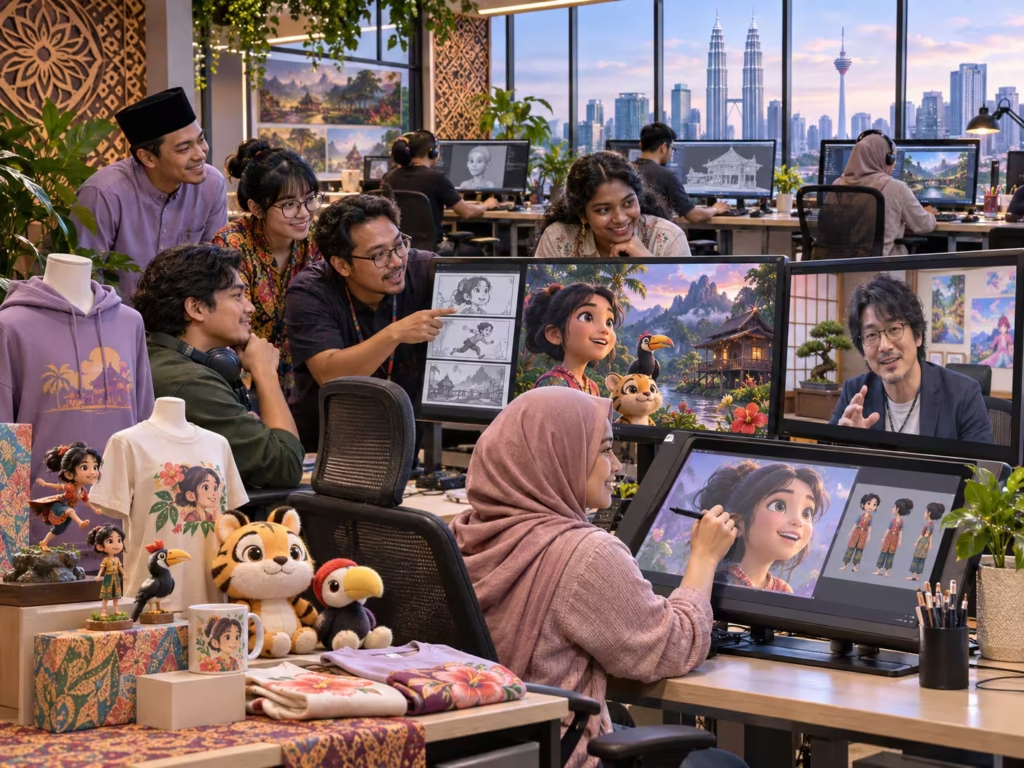
Malaysia’s film incentives are only as credible as the infrastructure behind them. Iskandar Malaysia Studios (IMS) in Johor has become the physical centre of that credibility. Since beginning operations in 2014, IMS has contributed more than RM1.3 billion to Johor’s economy through direct production expenditure, including payments to local crew, set construction, support services, accommodation, catering, and equipment rental. It has hosted more than 120 projects across films, television series, and international productions, with cumulative production value in 2026 estimated at RM100 million.
From Soundstages to Standing Sets
IMS is no longer competing on space alone. The studio has announced plans to add standing sets—aircraft cabins, cockpits, prisons, trains, courtrooms, and traditional Malay villages—to reduce the cost and time productions spend building temporary sets. The expansion is designed to attract repeat international business, particularly from producers who need reliable, ready-made environments rather than location-dependent shoots.
Virtual Production Moves From Novelty to Routine
The more consequential shift is technological. IMS is replacing green screens with LED walls and expanding virtual production, allowing productions to create real-time backgrounds and reduce travel costs, filming time, and physical location requirements. The adoption curve is visible: more than eight projects used virtual production at IMS in 2026 year-to-date, compared with more than six in 2025 and fewer than five in 2024. The studio is pursuing this through a collaboration with OMG Studios, and it is also strengthening the use of artificial intelligence in production workflows. Over the next three to five years, IMS aims to raise annual production value to at least RM150 million, driven by FIMI, new sets, and technology adoption.
The International Mix and the JS-SEZ Advantage
Roughly 60 per cent of projects at IMS in 2026 came from overseas productions, particularly the United States, Singapore, and China. Competitive costs, FIMI, international-standard facilities, and Johor’s proximity to Singapore are cited as key reasons. The Johor-Singapore Special Economic Zone is expected to deepen this advantage by offering access to talent and regional markets at more competitive operating costs. In September 2026, Malaysia also announced Malaysia-Australia and Malaysia-South Korea production slates expected to bring about US$22 million (RM92 million) of international film and TV work into the country over two years, with IMS positioned as a primary beneficiary.
The Remaining Gap
Infrastructure alone does not make an industry. Malaysia’s studio capacity now rivals regional competitors, but the test is whether local crews, post-production houses, and IP owners capture more of the value chain. IMS is building the hardware; the software—skills, original content, and distribution—remains the variable that will determine whether Johor becomes a true regional production hub rather than a cost-effective service location.
You may also like
-
Survey Kiwi and CEO James Cooper-Jones Clinch Double Win at Tech X Summit Global 2026 in Singapore
-
Momcozy Celebrates 11.11 with a Focus on Making Every Mom Moment Better
-
BigSeller Shares Four-Point Inventory Checklist for Malaysian Sellers Ahead of 11.11
-
Anti-Rust Guarantee for Coastal Projects: GennHann Outlines Quality Risks of “Fake 304” in Malaysia’s Humid Climate
-
Sanct Social releases Episode 8 and a step-by-step look at the five features it shows, from a sleep alarm to friend categories