 Peduli Kesehatan Lingkungan, PTPN Group melalui Unit Riset Sungei Putih PT RPN Berkolaborasi Lakukan Fogging
  Tips Traktir Teman ketika Ulang Tahun agar Tidak Boncos
  Mengatur Keuangan Saat Punya Cicilan agar Tetap Terkendali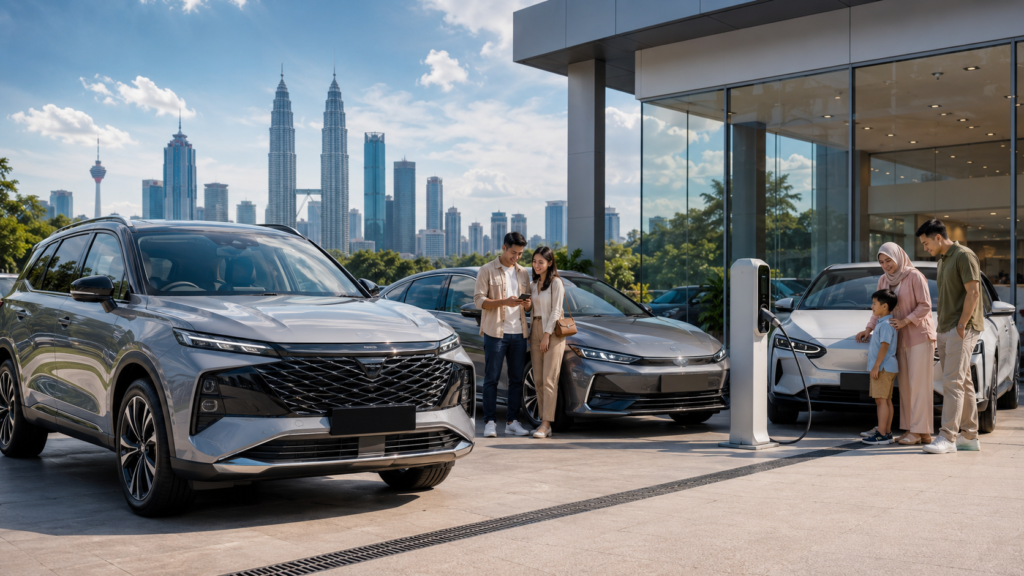
Malaysia’s automotive industry has evolved from a domestic vehicle production initiative into a competitive manufacturing ecosystem that plays an important role in Southeast Asia’s economic landscape. Over several decades, Malaysia has built strong automotive capabilities through national car manufacturers, international collaborations, skilled workers, and an expanding supplier network.
The industry is now entering a new transformation phase as manufacturers adapt to global changes, including electric vehicle development, digital manufacturing, sustainability requirements, and shifting consumer expectations.
With increasing competition from regional automotive hubs, Malaysia is focusing on improving production capabilities while attracting new investments and strengthening its position as a strategic automotive destination in ASEAN.
Official automotive industry information and market updates can be accessed through the Malaysian Automotive Association (MAA):
https://www.maa.org.my/
The Evolution of Malaysia’s Automotive Production Industry
Malaysia’s automotive manufacturing journey began with a national ambition to develop local industrial capability. The establishment of Proton in the 1980s became a major milestone because it allowed Malaysia to develop domestic expertise in vehicle engineering, assembly operations, and automotive supply chains.
Over time, Proton transformed from a national vehicle producer into a more internationally connected automotive company. Its collaboration with Geely provided access to global automotive technology, modern vehicle platforms, and improved manufacturing processes.
Perodua also became a key driver of Malaysia’s automotive growth by focusing on affordable and efficient vehicles. The company successfully captured consumer demand by producing compact cars that match Malaysian driving conditions, urban mobility needs, and purchasing power.
The success of these two national manufacturers created a foundation for Malaysia’s broader automotive ecosystem.
Strong Automotive Supply Chains Support Industry Competitiveness
A major advantage of Malaysia’s automotive sector is the development of a comprehensive supplier network.
The country has established thousands of businesses involved in automotive-related production, including:
- Vehicle components
- Electrical systems
- Metal fabrication
- Plastic components
- Automotive electronics
- Manufacturing services
This supply chain allows vehicle manufacturers to operate efficiently while supporting local businesses and employment opportunities.
Malaysia’s automotive supplier ecosystem has also benefited from the country’s strong electronics manufacturing sector. As modern vehicles become increasingly dependent on semiconductors, sensors, and software systems, Malaysia’s electronics expertise provides additional advantages.
This combination of automotive and electronics capabilities creates opportunities for Malaysia to participate in future mobility technologies.
International Partnerships Accelerate Automotive Innovation
Global partnerships have become increasingly important in strengthening Malaysia’s automotive competitiveness.
Proton’s relationship with Geely demonstrates how international cooperation can accelerate technological advancement. Through this partnership, Proton has improved product development, introduced modern vehicle features, and expanded its ability to compete in a changing automotive market.
International manufacturers such as Toyota, Honda, BMW, and Mercedes-Benz have also contributed to Malaysia’s automotive ecosystem through manufacturing operations, investment, and technology transfer.
These collaborations help Malaysia improve production standards while connecting local companies with global automotive networks.
Digital Manufacturing and Industry 4.0 Transformation
The future of automotive manufacturing is increasingly influenced by automation and digital technology.
Malaysian automotive companies are adopting Industry 4.0 approaches to improve efficiency and production quality. These technologies include:
- Automated production systems
- Artificial intelligence inspection
- Robotics
- Real-time manufacturing monitoring
- Data-driven production management
Digital transformation allows manufacturers to reduce production costs, improve accuracy, and respond faster to market changes.
As global automotive competition becomes more technology-driven, manufacturing innovation will become a key factor determining Malaysia’s future competitiveness.
The Impact of Electric Vehicles on Malaysia’s Automotive Industry
Electric vehicle development represents one of the biggest changes affecting Malaysia’s automotive sector.
The growing demand for EVs is encouraging manufacturers to rethink production strategies and invest in new technologies. Battery systems, charging infrastructure, electronic components, and software development are becoming increasingly important parts of the automotive value chain.
Malaysia’s existing manufacturing experience provides a strong foundation for EV development. However, the country must continue improving local capabilities to compete with regional EV production centers.
Government strategies supporting EV adoption and industrial modernization are outlined through MITI Malaysia’s industrial policies:
Malaysia’s Future as a Regional Automotive Manufacturing Player
Malaysia’s automotive industry has moved beyond basic vehicle assembly. It is becoming a more advanced ecosystem combining manufacturing expertise, technology innovation, and sustainable mobility development.
The future success of the sector will depend on how effectively Malaysia integrates traditional automotive strengths with emerging technologies.
By strengthening local brands, encouraging international cooperation, and investing in smart manufacturing, Malaysia has the potential to remain a significant automotive force in Southeast Asia.
The transformation of Malaysia’s automotive industry reflects a broader shift toward smarter, cleaner, and more connected transportation solutions.
You may also like
-
As AI Reshapes Society, Malaysia to Host AACM 2026 to Explore the Future of Humanity
-
ICW AND BUILDXPO MALAYSIA 2026 PREVIEW: NEW PLATFORMS, IDEAS AND INNOVATIONS TAKE CENTRE STAGE
-
Three lessons from Hangzhou, and one potential partnership to follow up: Sanct Social founder on China’s Global Digital Trade Expo
-
Monash University Malaysia Leads Triple Alliance’s Flagship Mental Health Initiative To Strengthen Student Wellbeing
-
Xerox Returns To Malaysia With New A4 Colour Portfolio Following Lexmark Integration