 Peduli Kesehatan Lingkungan, PTPN Group melalui Unit Riset Sungei Putih PT RPN Berkolaborasi Lakukan Fogging
  Tips Traktir Teman ketika Ulang Tahun agar Tidak Boncos
  Mengatur Keuangan Saat Punya Cicilan agar Tetap Terkendali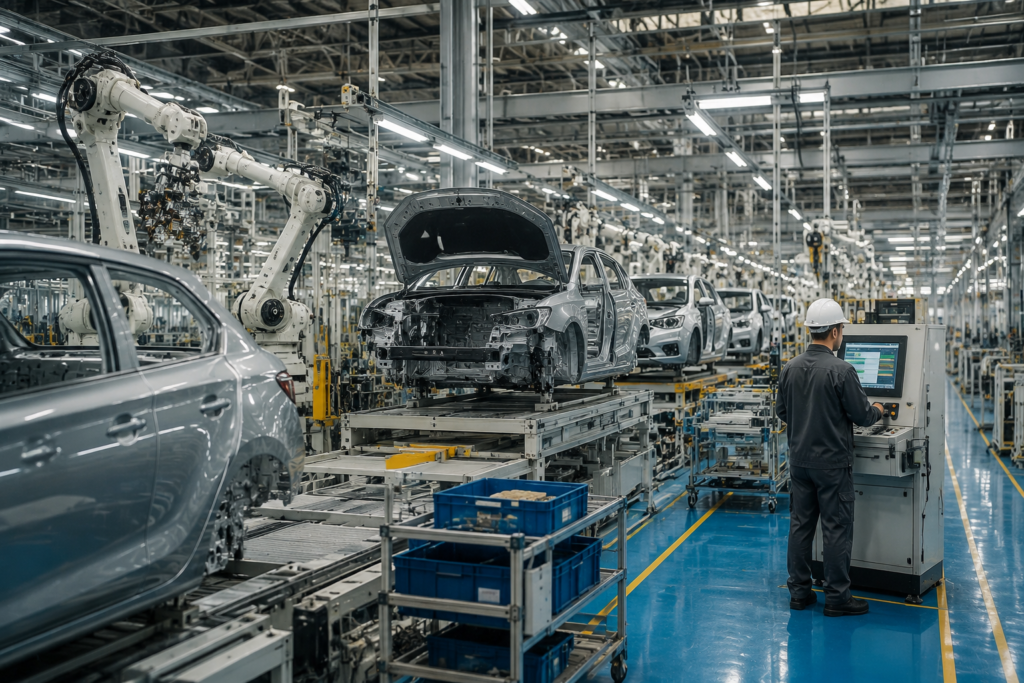
The Philippine automotive industry is entering a period in which local manufacturing is again becoming an important part of national industrial policy. Although imported vehicles continue to dominate many market segments, recent investments in assembly plants, commercial platforms, and electrified transportation demonstrate that domestic production still has room to grow.
The country’s main challenge is scale. Thailand and Indonesia manufacture significantly more vehicles and maintain extensive networks of component suppliers, logistics providers, and engineering companies. Philippine assemblers frequently depend on imported engines, transmissions, electronics, and body components, which can increase production costs and reduce the economic value retained locally.
Government programs have attempted to address this disadvantage by encouraging manufacturers to produce vehicles and major components inside the country. The Philippine Board of Investments provides information on incentives, priority industries, and investment programs supporting automotive manufacturing and related industrial activities.
Toyota Tamaraw Reflects a More Targeted Production Model
The revival of the Toyota Tamaraw offers a practical example of how Philippine vehicle manufacturing may develop. Instead of focusing exclusively on passenger sedans, the locally assembled Tamaraw is designed as a flexible commercial platform.
Businesses can configure the vehicle as a delivery van, passenger shuttle, refrigerated truck, ambulance, patrol vehicle, or mobile retail unit. This approach responds directly to the needs of small enterprises, local governments, logistics operators, agricultural cooperatives, and public-service organizations.
The model also creates opportunities beyond final assembly. Local body builders can design specialized rear compartments, while equipment suppliers can provide cooling systems, medical installations, seating arrangements, storage equipment, and other modifications.
This type of production may be more suitable for the Philippines than attempting to compete directly with high-volume factories elsewhere in Southeast Asia.
Imported Vehicles Continue to Create Strong Competitive Pressure
Philippine consumers have access to a wide selection of imported crossovers, pickups, multipurpose vehicles, and compact cars. Many arrive from ASEAN countries under preferential trade arrangements, allowing manufacturers to serve the Philippine market without operating a domestic factory.
Imported vehicles often benefit from large-scale production. A regional plant manufacturing hundreds of thousands of units can purchase components at lower prices and distribute engineering costs across a much larger number of vehicles.
Local assemblers must therefore offer advantages that imports cannot easily replicate. These may include faster customization, stronger access to locally available parts, products adapted to Philippine road conditions, and direct support for commercial customers.
Production Volume Is Not the Only Measure of Success
The economic impact of local manufacturing should not be measured only by the number of completed vehicles. Employment, technical training, supplier development, tooling investment, and locally produced components are equally important.
A factory that assembles a moderate number of vehicles but purchases seats, wiring harnesses, stamped metal parts, tires, batteries, and plastic assemblies from Philippine suppliers may create more domestic value than a larger operation relying almost entirely on imported kits.
Higher local content also reduces exposure to international shipping disruptions and currency fluctuations.
Future Growth Will Depend on Specialization
The Philippines is unlikely to replace Thailand or Indonesia as the region’s largest automotive producer. A more realistic strategy is to specialize in vehicle categories and technologies that match local industrial capabilities.
Commercial vehicles, electric public transport, motorcycles, automotive electronics, and customized utility platforms offer promising opportunities. The country’s established electronics industry may also support future production of sensors, wiring systems, control units, charging equipment, and battery-management components.
Local automotive manufacturing can remain competitive when it solves specific economic and mobility problems. The strongest opportunities will come from vehicles that are durable, adaptable, affordable to maintain, and supported by dependable parts and service networks.
You may also like
-
VRITIMES Exhibits at SUPPLYCON 2026 as Official Media Partner
-
Casino Plus, official presenter ng MassKara Festival 2026; Zeinab, Moonstar88, Baby Dolls, magpapasiklab sa 3-day concert
-
Gyukatsu BGC Brings Its Signature Japanese Beef Cutlet Experience to Park Triangle Mall
-
How an AI Communication Coach Helped a First-Generation Filipina Immigrant Find Her Voice
-
44th ASEAN Ministers on Energy Meeting (AMEM) and AEBF-26 Open in Manila, Marking New Milestones in ASEAN Energy Cooperation