 Sambut Libur akhir Tahun, Janji Jiwa Hadirkan Pengalaman Jasmine Infusion lewat Blooming Holiday Series
 Kinerja Positif Penghimpunan Dana, BRI Region 6 Terus Perkuat Pertumbuhan Tabungan
 10 Filipino Motivational Speakers Making an Impact to Watch in 2027
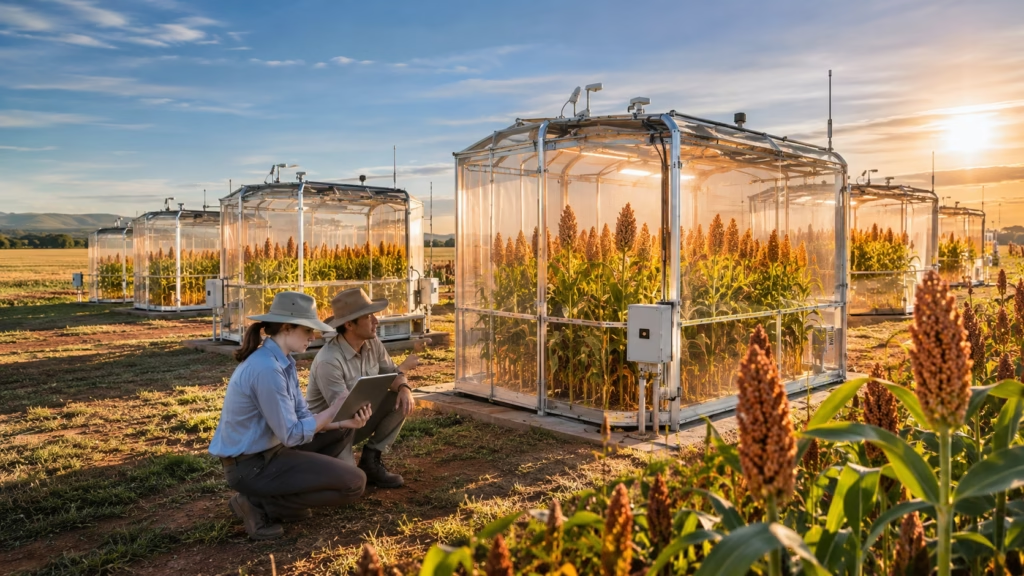
A Microbial Upgrade Four Decades in the Making
Chickpeas do not fix nitrogen on their own. They rely on soil bacteria called rhizobia, which convert atmospheric nitrogen into a form the plant can use. In Australian soils, those bacteria do not occur naturally, so growers rely on inoculants. The problem is that the commercial strain used in those inoculants has not been renewed since the 1970s . In May 2026, the NSW Department of Primary Industries and Regional Development (DPIRD) confirmed it was collaborating on a national program to identify elite new rhizobia strains — the first such effort in more than 40 years .
Why Strain Renewal Is an Economic Lever
Chickpea production in NSW reached a record $1.1 billion in gross value of production in the last financial year, accounting for around 86 per cent of total NSW pulse exports by value . A more efficient rhizobia strain does not just improve yields. It reduces the need for synthetic nitrogen fertiliser, a direct cost saving for growers and a hedge against global fertiliser supply instability. NSW Minister for Agriculture Tara Moriarty drew the connection explicitly: the research will help “reduce the need for inorganic fertilisers at a time when instability of supply is being felt globally” .
The Science: From Laboratory to Paddock
The work is split across two NSW DPIRD sites. The Elizabeth Macarthur Agricultural Institute is characterising strains for manufacturing traits and quality assurance. The Tamworth Agricultural Institute is running field trials at Tamworth, Breeza, and Narrabri to evaluate the strains under real growing conditions . The trials also test management practices that affect nodulation success — herbicide effects, sowing timing, and inoculation methods . The project is part of a GRDC-funded national investment involving SARDI, Adelaide University, Murdoch University, and the Queensland Department of Primary Industries .
The Real-World Context: Expanding the Chickpea Map
The current chickpea belt is concentrated in northern NSW. New rhizobia strains could potentially allow growers to expand chickpea into areas where the crop was previously marginal, diversifying rotations and spreading biological nitrogen fixation across a wider geography . For a sector navigating volatile fertiliser prices and climate variability, that is not a marginal gain. It is a structural improvement in the economics of one of Australia’s most valuable pulse exports.
You may also like
-
Beyond Events: Jennifer Nguyen Builds Cross-Border Industry Connections Across Asia
-
Building Connections Across Asia: Jasmine Chau’s Journey Through Industry Events in 2026
-
ATARMAXXING launches university course finder and adds 15 Year 11 study hubs
-
UNSW-developed AI tool makes complex spatial data easier to use
-
Vietfood & Beverage – ProPack 2027: Building on the Success of 2026 to Expand Business Opportunities Across Vietnam’s F&B Industry