 Peduli Kesehatan Lingkungan, PTPN Group melalui Unit Riset Sungei Putih PT RPN Berkolaborasi Lakukan Fogging
  Tips Traktir Teman ketika Ulang Tahun agar Tidak Boncos
  Mengatur Keuangan Saat Punya Cicilan agar Tetap Terkendali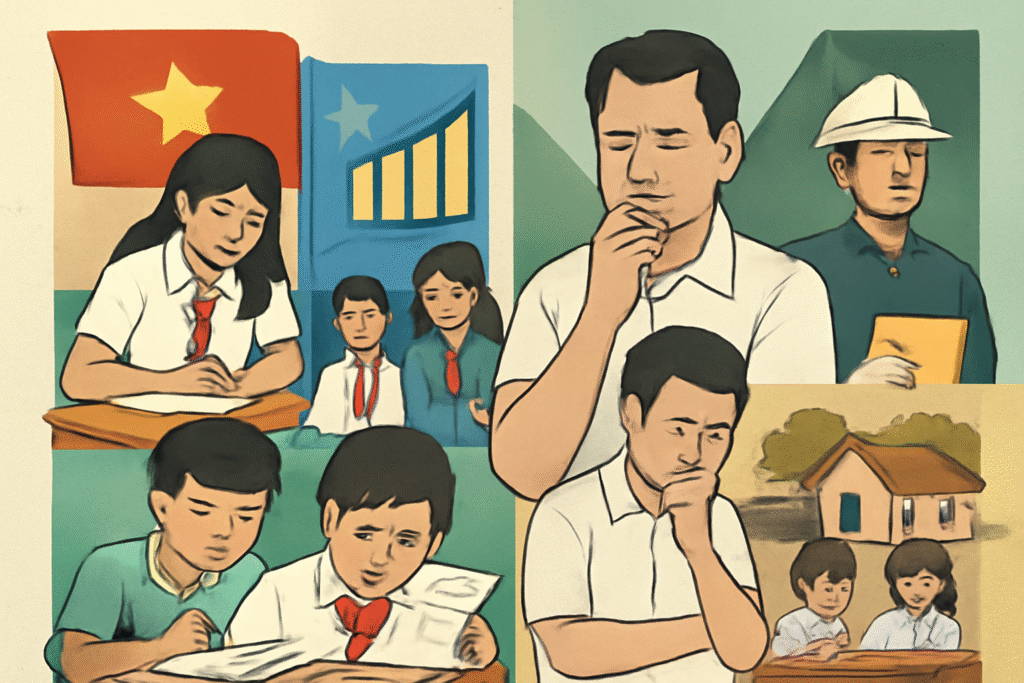
Over the past few decades, Vietnam has achieved substantial improvements in its education system, advancing from a country recovering from war to one that ranks highly in global educational assessments. However, despite these achievements, several significant obstacles remain that hinder the full potential of the country’s educational landscape.
Achievements
One of Vietnam’s greatest educational achievements is its nearly universal literacy rate, which stands at 94%. This is a result of the country’s commitment to providing free primary and secondary education. The government’s focus on making education accessible to all children has been fundamental in lifting millions out of poverty.
Vietnam’s students have also consistently excelled in international assessments such as the PISA tests. The country’s strong performance in mathematics, science, and reading comprehension demonstrates that the education system, despite challenges, delivers impressive academic results. Notably, these results come despite lower public spending on education compared to wealthier nations, suggesting that Vietnam’s educational methods are highly effective.
Vocational education has also seen considerable growth in Vietnam. Recognizing the need for a skilled workforce, the country has focused on creating vocational schools that provide students with hands-on, industry-specific training. This has not only improved employability among young people but also helped boost the country’s economic growth.
Obstacles
Despite the successes, the education system in Vietnam faces several challenges. The reliance on rote memorization in many classrooms is one of the most significant issues. This method encourages students to remember information without deeply understanding the material, which limits the development of critical thinking and problem-solving abilities. Critics argue that this undermines students’ ability to think creatively and adapt to new challenges.
A significant issue is the gap in educational quality between urban and rural areas. Students in major cities have access to modern facilities, well-trained teachers, and advanced learning tools. However, rural areas often face shortages of qualified teachers and outdated resources. This divide results in unequal learning opportunities, with students in rural areas falling behind their urban counterparts.
Moreover, teacher training remains inadequate in many parts of the country. Although there is a high demand for teachers, many are undertrained and lack the skills necessary to effectively teach a diverse group of students. This has led to concerns about the overall quality of instruction in schools.
Conclusion
While Vietnam’s education system has made great strides, particularly in terms of improving access to education and achieving strong results in international assessments, there are still important challenges to address. Reducing the reliance on rote learning, improving teacher training, and addressing regional disparities will be key to ensuring that Vietnam’s educational advancements are sustainable in the long run.
You may also like
-
Đối thoại Thời đại mới 2026: Giao lưu những người làm truyền thông trẻ Trung Quốc – Việt Nam được tổ chức tại Hà Nội
-
Ademco Security Group Ra Mắt UltraSenSync: Công Nghệ Vision AI Tái Định Hình Ngành An Ninh Và Quản Lý Vận Hành Cơ Sở Hạ Tầng
-
CRNK đưa mũ bảo hiểm thông minh Hàn Quốc vào thị trường Việt Nam
-
LPIXEL hợp tác với VNPT-IT cung cấp AI hỗ trợ chẩn đoán hình ảnh y tế “EIRL” tại Việt Nam
-
LA TRỊNH atelier mang “Gods Within Her” đến Milan, kể câu chuyện về tính nữ và văn hóa Việt