 Peduli Kesehatan Lingkungan, PTPN Group melalui Unit Riset Sungei Putih PT RPN Berkolaborasi Lakukan Fogging
  Tips Traktir Teman ketika Ulang Tahun agar Tidak Boncos
  Mengatur Keuangan Saat Punya Cicilan agar Tetap Terkendali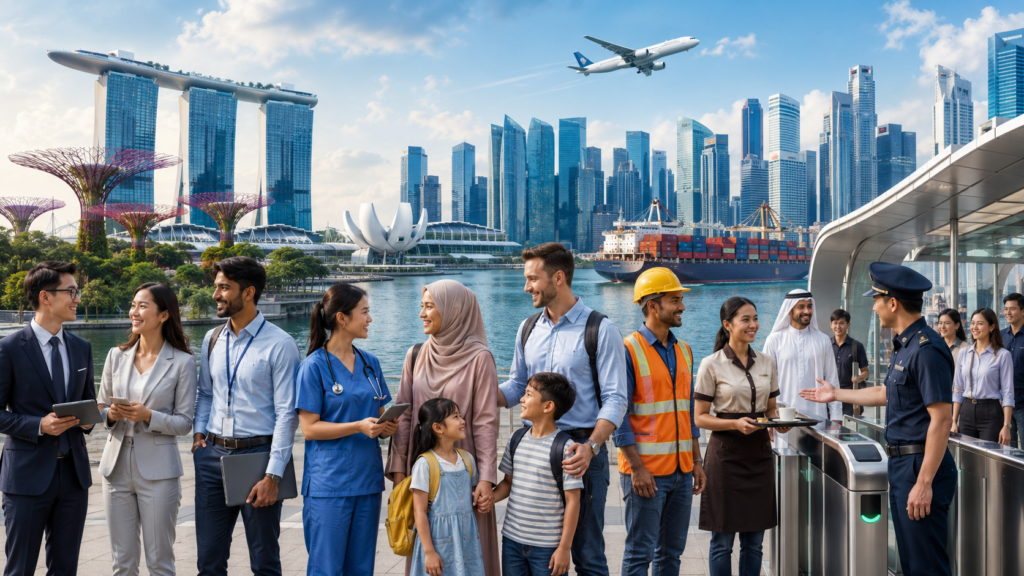
Singapore’s immigration system is designed not only to meet economic needs but also to support the country’s long-standing commitment to multicultural harmony. As a society composed of multiple ethnicities, religions, and cultural traditions, Singapore places strong emphasis on ensuring that immigration contributes positively to social integration rather than social fragmentation.
The economic rationale for immigration remains important. Singapore depends on foreign professionals to sustain growth in sectors such as finance, technology, healthcare, education, and engineering. These individuals bring specialized knowledge that enhances productivity and strengthens the country’s global position. At the same time, lower-skilled foreign workers support essential industries that keep the city running efficiently.
However, economic considerations are only part of the policy framework. Social cohesion is equally critical. Immigration introduces new cultural influences, languages, and practices into an already diverse society. While this can enrich national life, it also requires careful management to prevent social segregation or misunderstanding between communities.
Singapore addresses this challenge through structured integration policies. Schools play a central role in fostering shared identity among young residents, regardless of background. Workplace environments encourage interaction among diverse groups, while public housing policies are designed to ensure ethnic balance within neighborhoods. These measures help reduce social clustering and promote everyday interaction between different communities.
The government also emphasizes shared civic values. Respect for the law, mutual tolerance, and responsibility toward community harmony are key expectations for both citizens and newcomers. Immigrants are encouraged to participate in community activities and adapt to local norms while maintaining aspects of their cultural heritage.
Permanent residency and citizenship are granted through a selective process that evaluates both economic and social factors. Applicants are assessed on their ability to contribute to the economy as well as their willingness to integrate into Singaporean society. This ensures that long-term residents are aligned with the country’s social framework.
Public perception plays a significant role in shaping immigration policy. Concerns about cultural change, competition for resources, and social cohesion are taken into account by policymakers. As a result, immigration levels and criteria are frequently reviewed to maintain balance between openness and stability.
Singapore’s model demonstrates that immigration policy can be used not only for economic development but also as a tool for maintaining social harmony in a highly diverse society.
You may also like
-
Astaka Launches SOL HealthTech Brand, Aiming To Capitalise On Growing Demand For Indoor Air Quality Solutions Across Asia
-
Three notes from Hangzhou: Sanct Social founder on how China backs its start-ups, one task per city, and a whole city out to see the moon
-
Sixteen companies, four ministries and agencies, two associations: inside the Indonesian delegation to Hangzhou’s Global Digital Trade Expo
-
Sanct Social joins Indonesian delegation to China’s Global Digital Trade Expo, explores the smart glasses and AI models already on sale there
-
YouHealth Singapore Highlights a Personalised TCM Approach to Sustainable Weight Management