 Cara Hemat Biaya Transfer antarbank dengan Manfaatkan Kuota Gratis Transfer di neobank
 Year 11 and Year 12 head start 2027: what to prepare before Term 1
 Malaysia Online Seller Disclosure Rules: What Marketplace Teams Should Audit Before 2027
The Geography of Opportunity
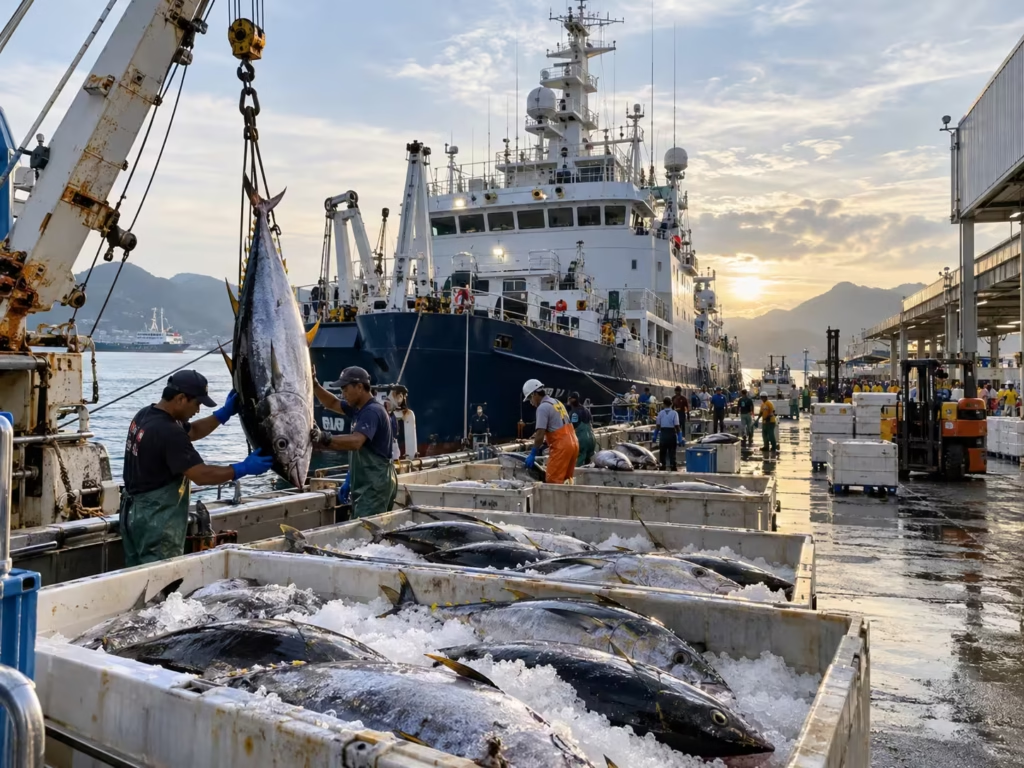
Sabah’s geographical position—flanked by the South China Sea, the Sulu Sea, and the Sulawesi Sea—confers upon the state a natural advantage in deep-sea fisheries that few regions in Southeast Asia can match. This advantage is now being systematically converted into economic strategy through a blue economy framework that extends far beyond capture fisheries into downstream processing, marine biotechnology, and maritime services.
The numbers underlying this vision are substantial. With projections of 1,000 vessels operating annually, each carrying an average of 50 tonnes of tuna, Sabah anticipates landing 50,000 tonnes of tuna per year—a volume that translates to approximately RM1.8 billion (USD382.5 million) in economic value. This projection aligns with the national Tuna Industry Development Strategic Plan 2021–2030, which targets 50,000 metric tonnes of oceanic tuna landings annually and the creation of over 1,000 new employment opportunities.
Downstream Value as the Strategic Imperative
The central challenge—and opportunity—in Sabah’s blue economy ambition lies in capturing value beyond the landing stage. Historically, a significant proportion of Malaysia’s tuna catch has been exported in unprocessed or minimally processed forms, with value addition occurring in destination markets. The state government has made clear that this pattern must change.
Sabah Chief Minister Datuk Seri Hajiji Noor has explicitly welcomed investors and business leaders to explore opportunities in sustainable fisheries and aquaculture, marine biotechnology, and maritime services. This invitation reflects a strategic recognition that the economic multiplier effects of fisheries are maximised when processing, packaging, branding, and distribution activities occur locally. The development of fish landing complexes in Sandakan and Hutan Melintang is intended to provide the physical infrastructure for this value capture.
The Tuna Hub Proposition
Malaysia’s potential to become a regional tuna transhipment hub is reinforced by the global tuna industry’s scale. The global tuna market is valued at approximately USD42 billion annually, with projections of growth to USD54 billion by 2032. Deputy Prime Minister Datuk Seri Dr Ahmad Zahid Hamidi has emphasised that realising this potential requires strengthening downstream industries and related shipping facilities.
The operationalisation of this vision is already visible in the fleet. The Kha Yang 666, Malaysia’s largest dedicated tuna carrier registered under the national flag, operates within the Indian Ocean Tuna Commission competence area with a 1,700-tonne cargo capacity. Homeported at Penang Port, this vessel is expected to strengthen the tuna supply chain, boost confidence in Malaysian fishery products, and help Penang emerge as a regional maritime and logistics hub.
International Cooperation and Knowledge Transfer
Sabah’s blue economy strategy is being complemented by international cooperation, particularly with Vietnam. NEKMAT General Manager Azrin Shah Ismail has noted that Vietnam possesses more advanced experience and technology in deep-sea fishing, while Malaysia has strong potential to develop downstream processing. This complementarity suggests a division of labour in which Malaysia leverages its geographical position and processing capabilities while learning from Vietnam’s operational expertise in distant-water fishing.
The fisheries sector’s centrality to Malaysia’s food security agenda ensures that blue economy development receives sustained policy attention. As articulated at the highest levels of government, “the fisheries industry is not only a protein supplier to the community but also a source of income for hundreds of thousands of families”.
Aquaculture’s Complementary Role
While deep-sea capture fisheries capture headlines, Sabah’s aquaculture sector provides a complementary growth pathway. The state’s extensive coastline and suitable water temperatures support a range of species, and the blue economy framework explicitly includes sustainable aquaculture as an investment priority. The integration of capture and culture fisheries within a unified blue economy strategy reflects a maturity in policy thinking that treats marine resources as a portfolio to be optimised rather than a single sector to be maximised.
Sabah’s blue economy gambit represents one of the most ambitious regional development strategies in Southeast Asia—a comprehensive attempt to convert geographical advantage into sustained economic value through strategic investment, infrastructure development, and international cooperation.
You may also like
-
Malaysia Online Seller Disclosure Rules: What Marketplace Teams Should Audit Before 2027
-
Christmas 2026: A Year-End Returns and Warehouse Readiness Guide for Malaysian Sellers
-
Habis Dijual Melalui Undian, Permohonan 10 Kali Ganda: 8 Mouthpiece Shisha Kaca Mokulog, Aplikasi dari Jepun
-
Your Journey to the Skies Begins Here: Mont Royale Announces Accredited Diploma in Airlines Cabin Crew Management
-
After 15 years inside Malaysia’s largest enterprises, the team behind Glem.ai is turning AI ambition into measurable results